CL TOWNHOUSE PROJECT
Located in a residential neighborhood planned in the 1950s along the eastern border of the Beirut Pine Forest, the townhouse occupies the Garden level and first floor of a building from that period, recently renovated.
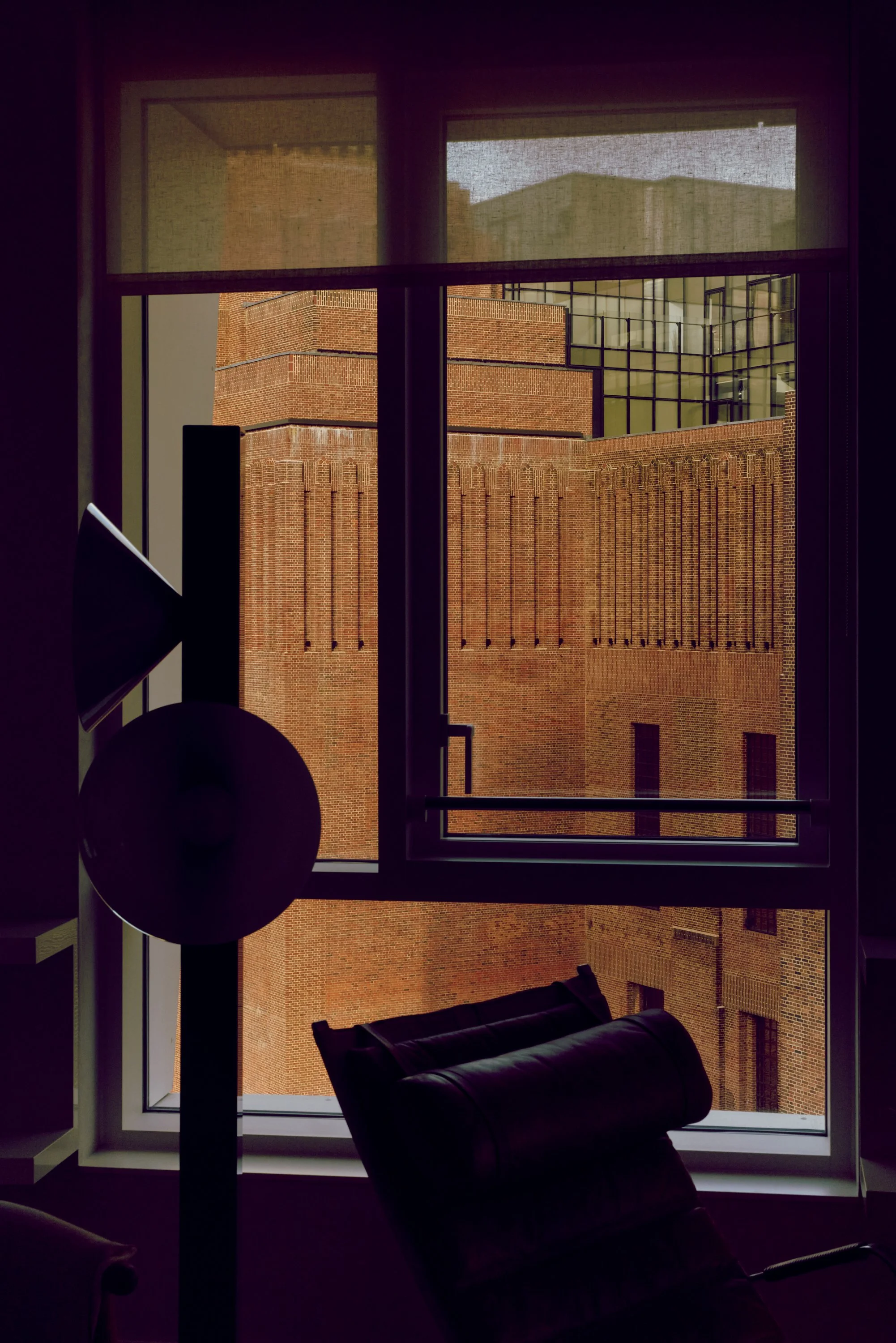
The original layout displayed a variety of typical and atypical characteristics of residential typologies from the French mandate era, including a 4.5m ceiling height, an unusual enfilade of rooms, and an enclosed haphazard loggia overlooking the inner courtyard, further modified by an earlier renovation.
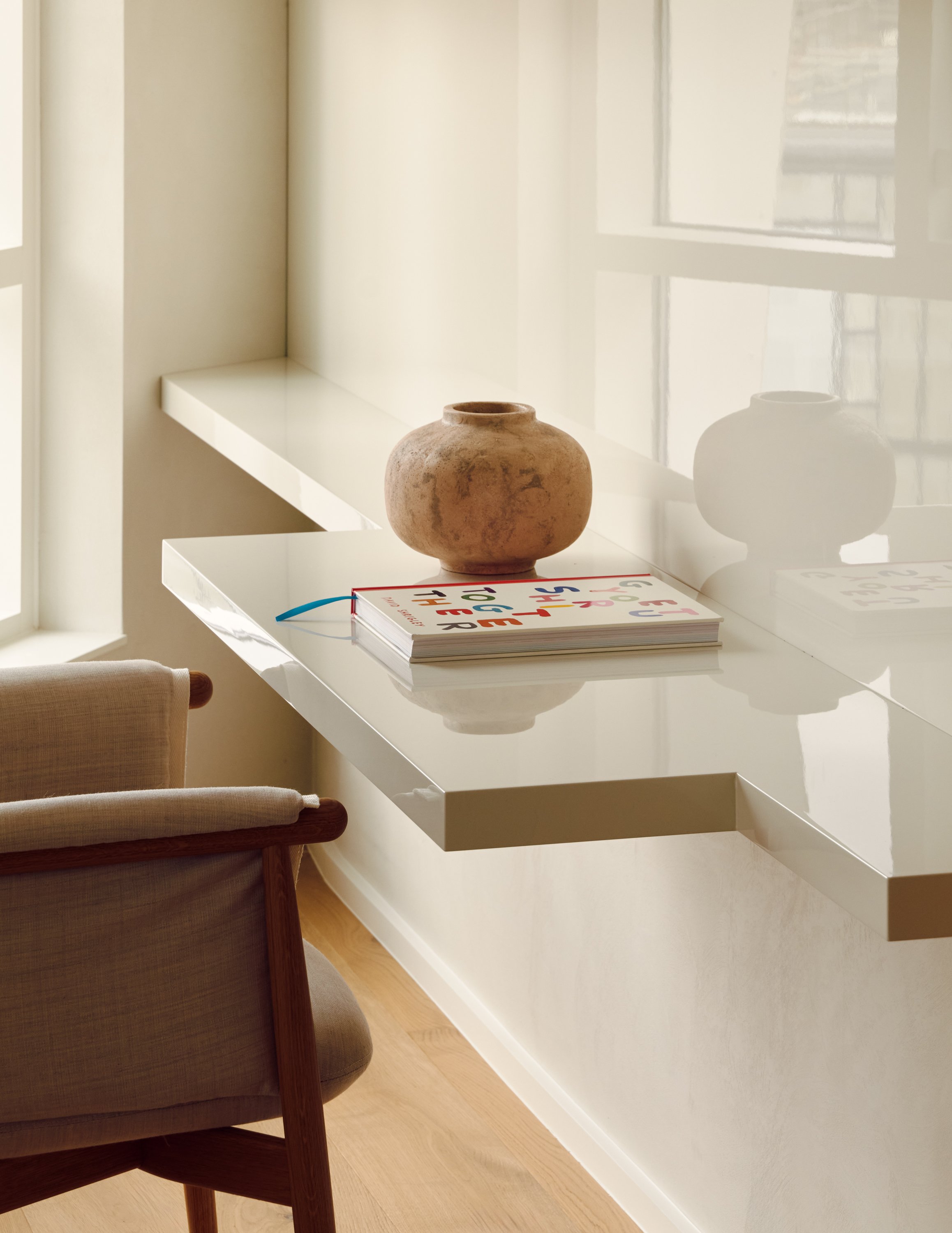
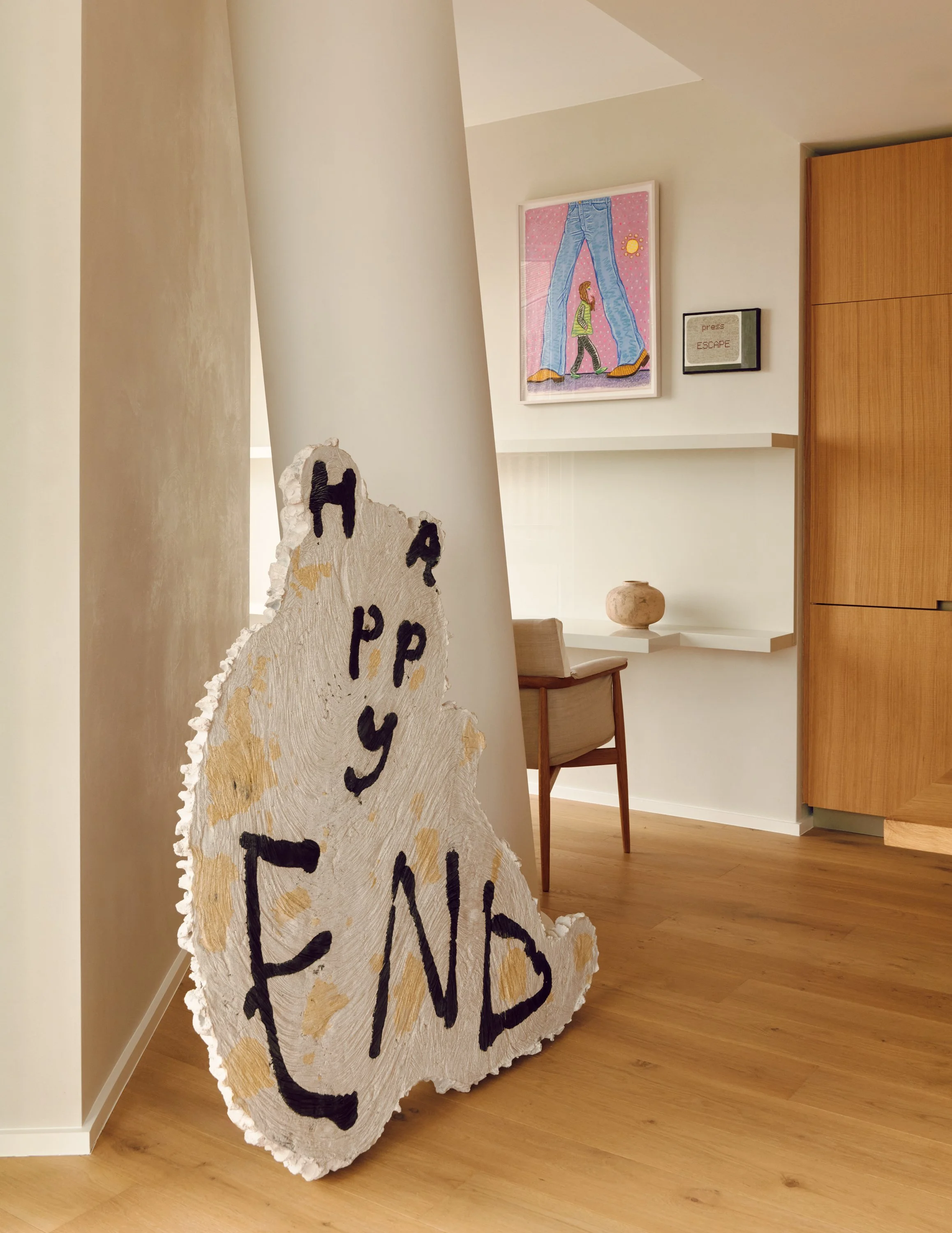
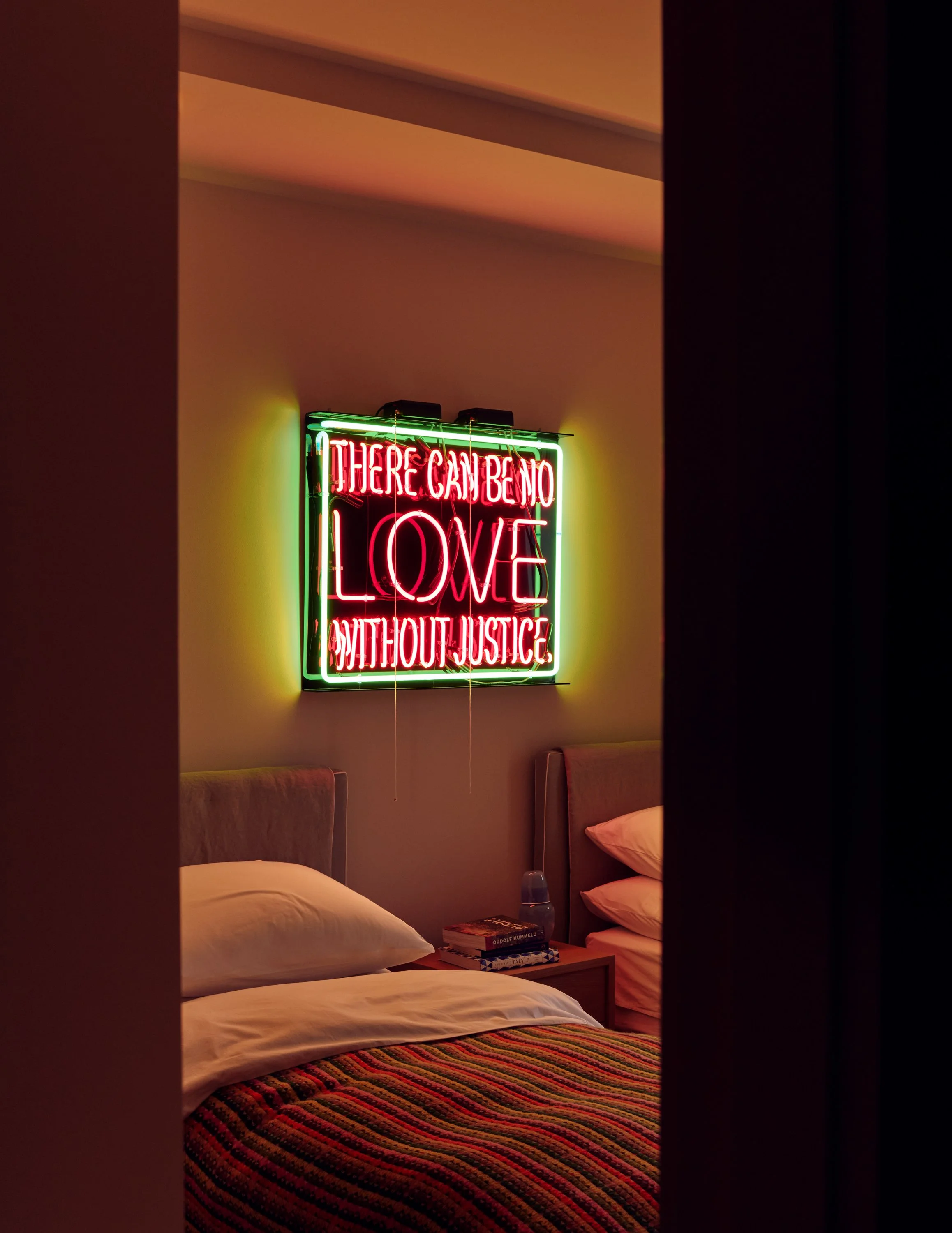
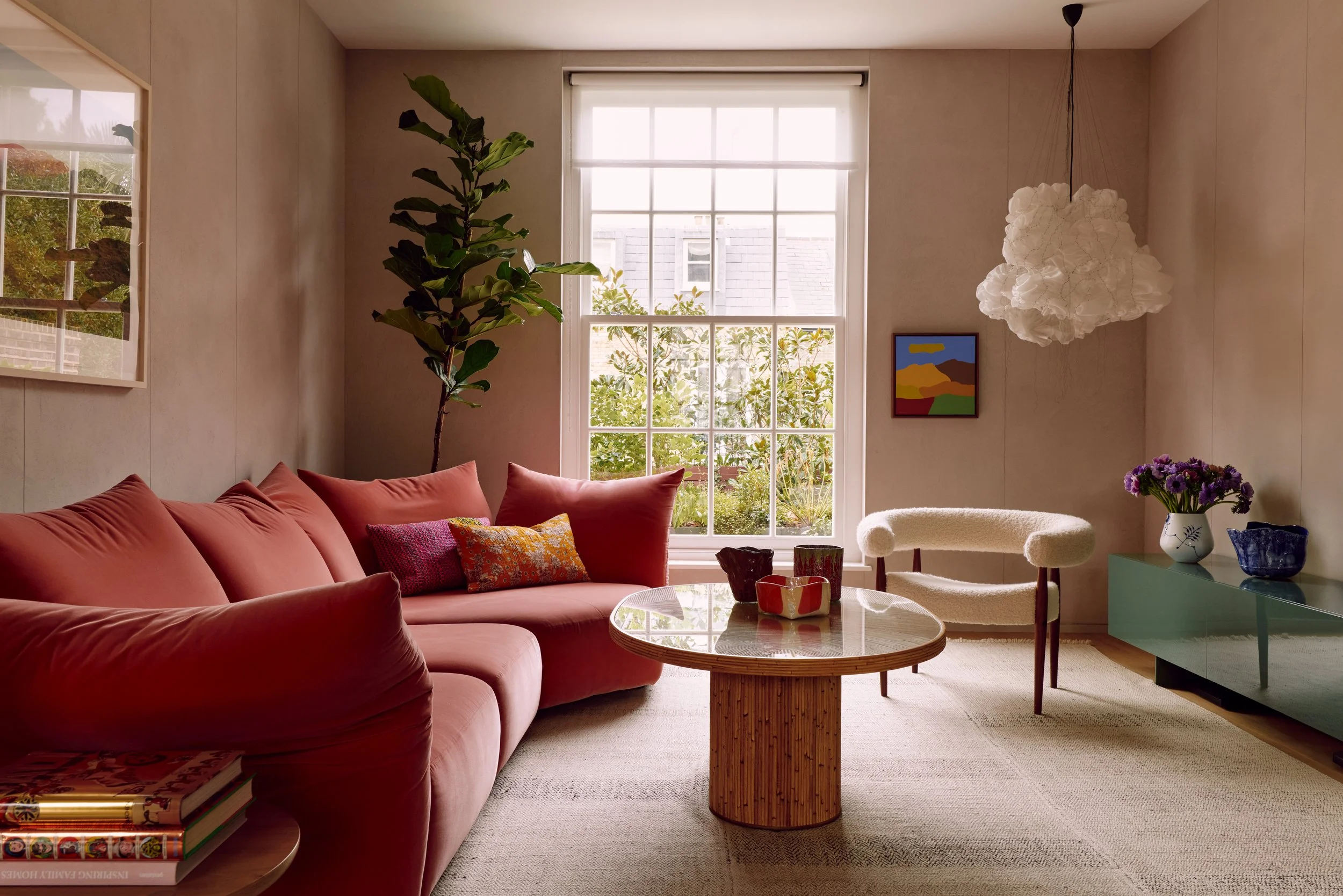
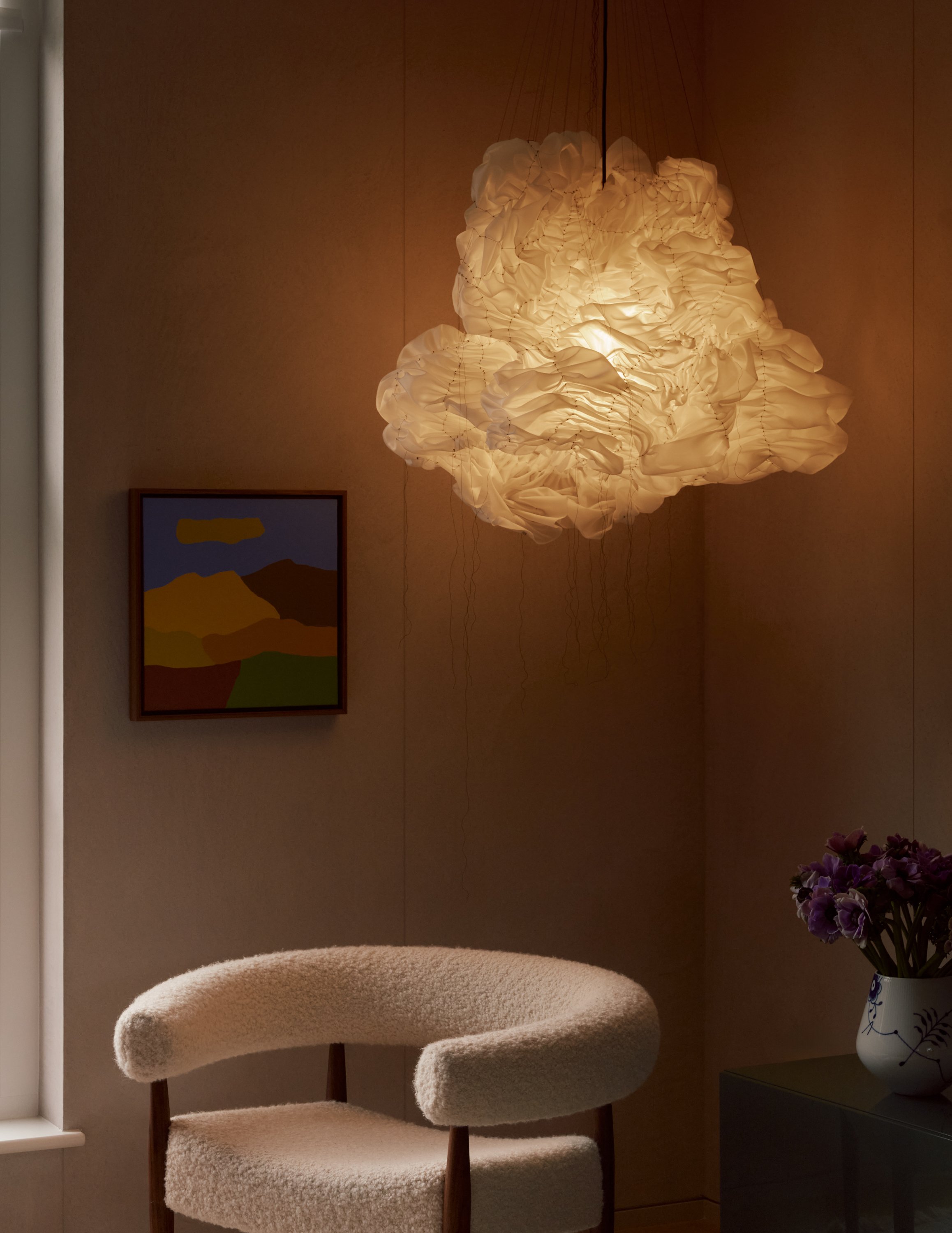
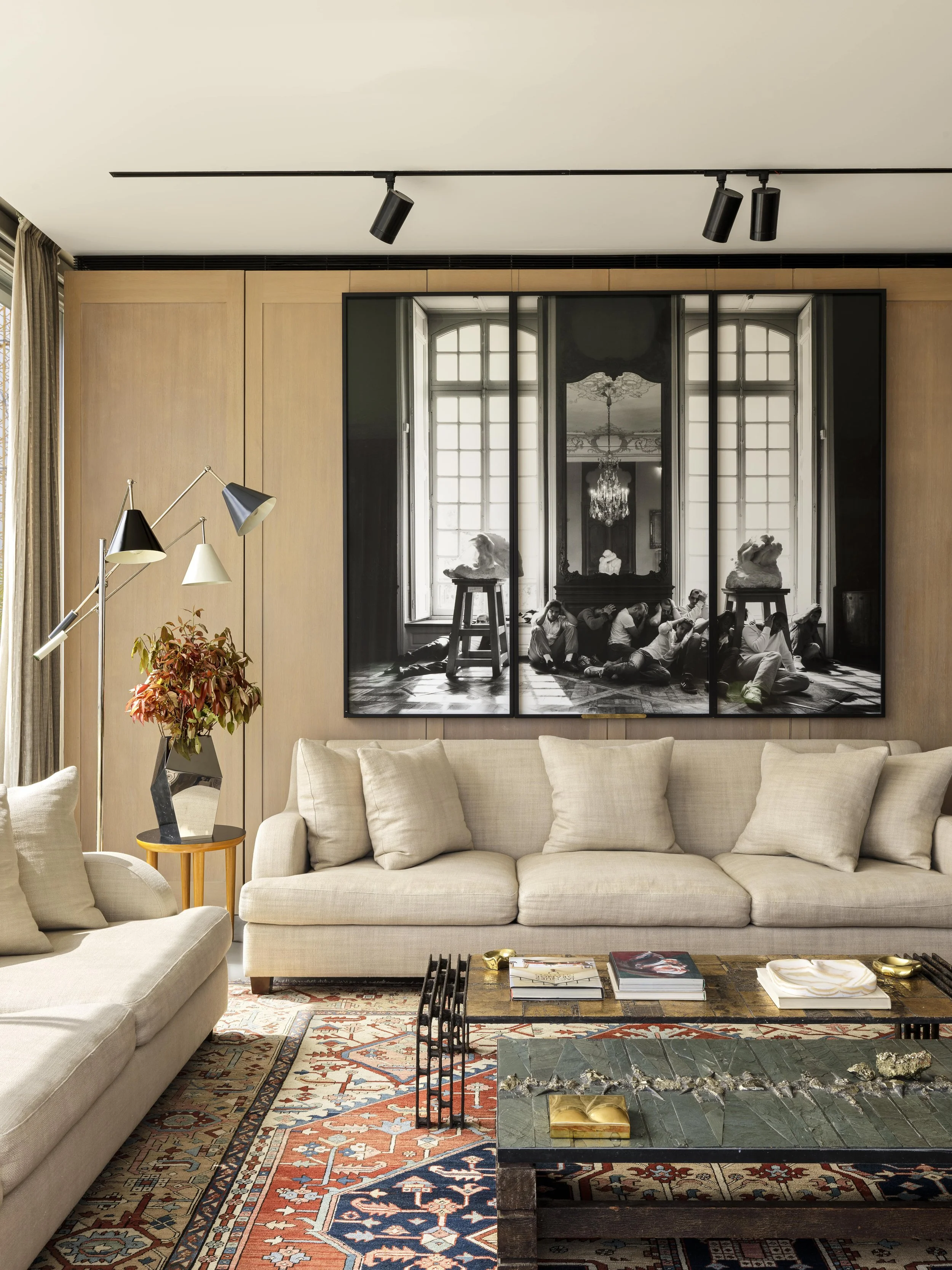
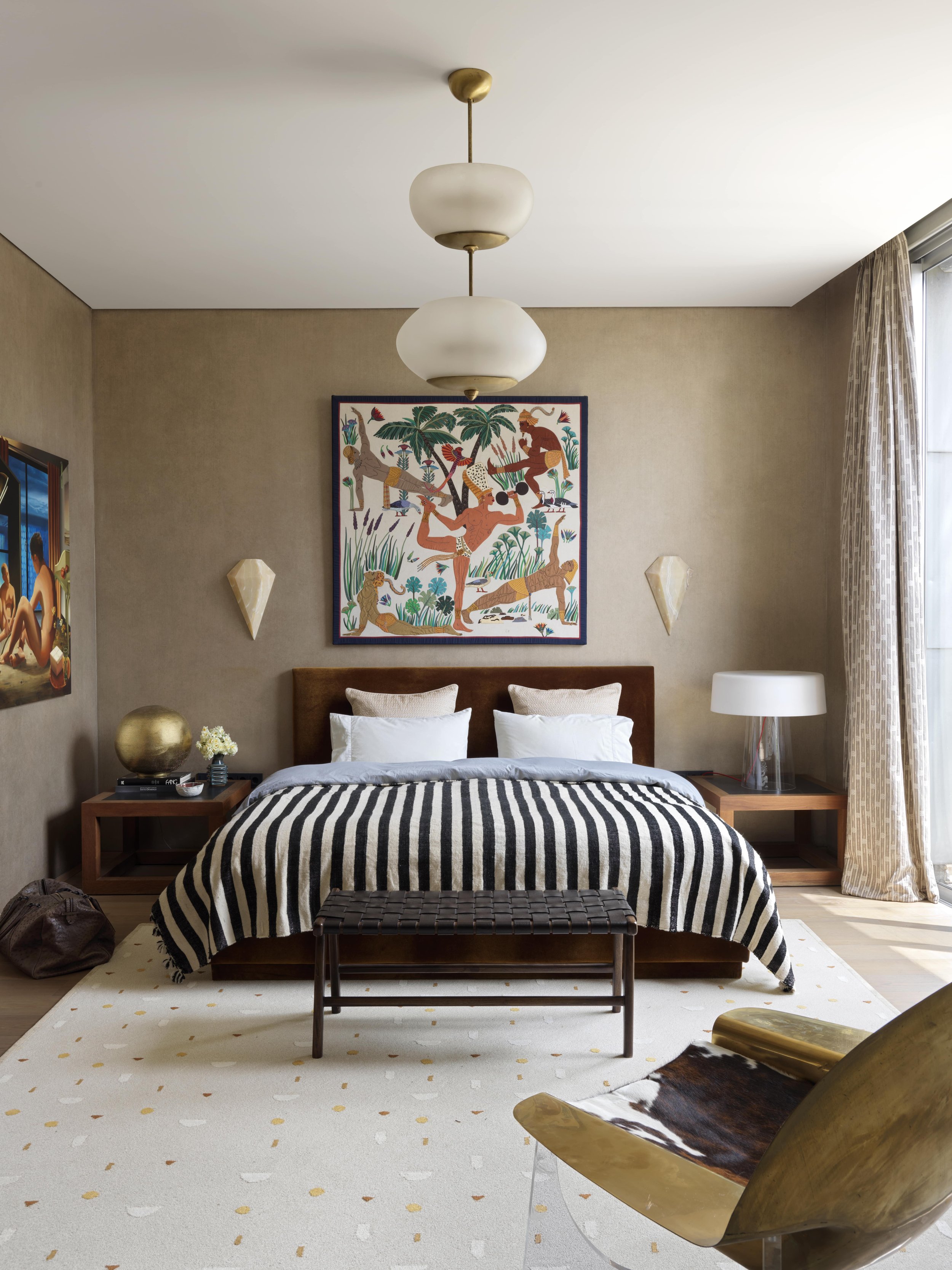
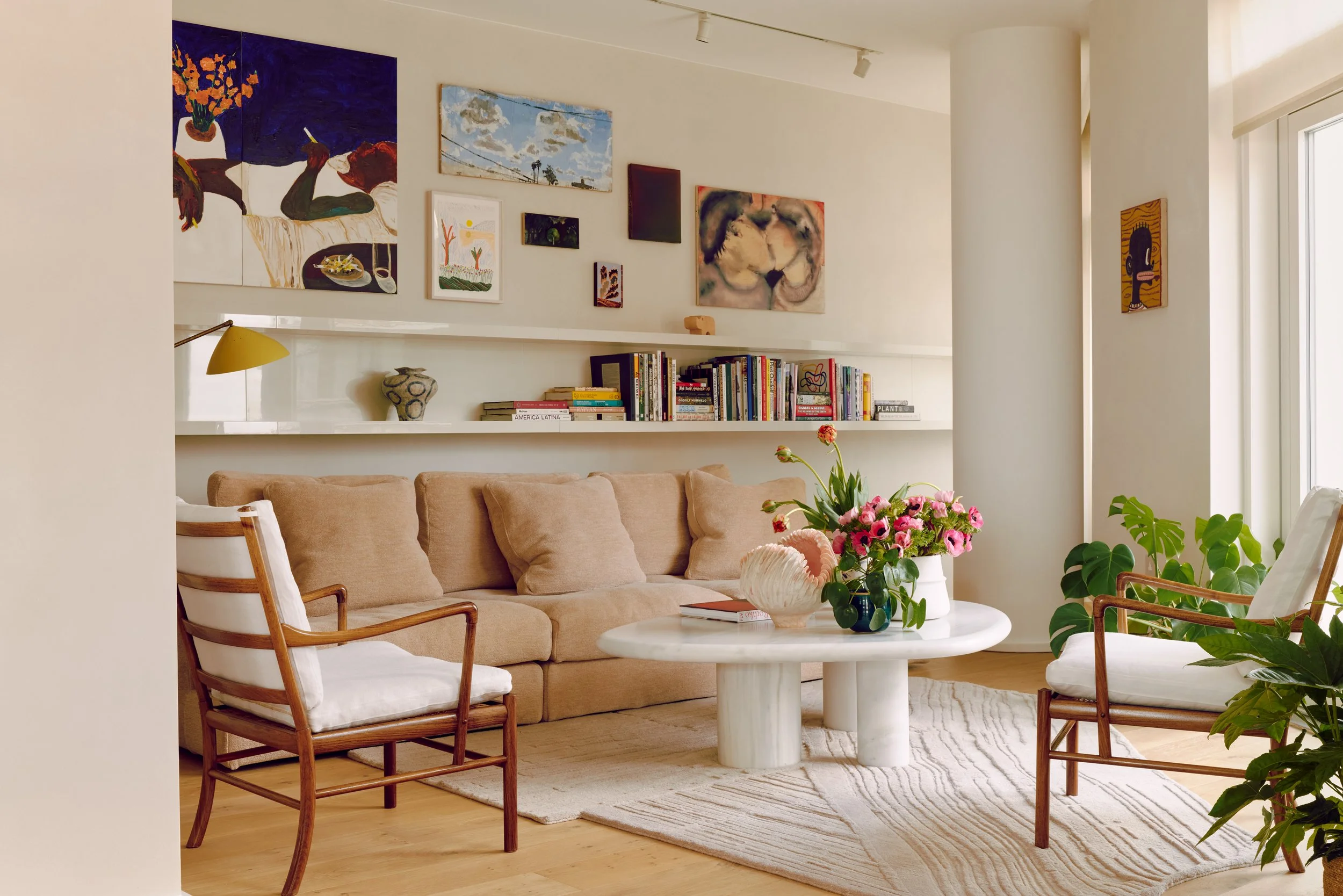
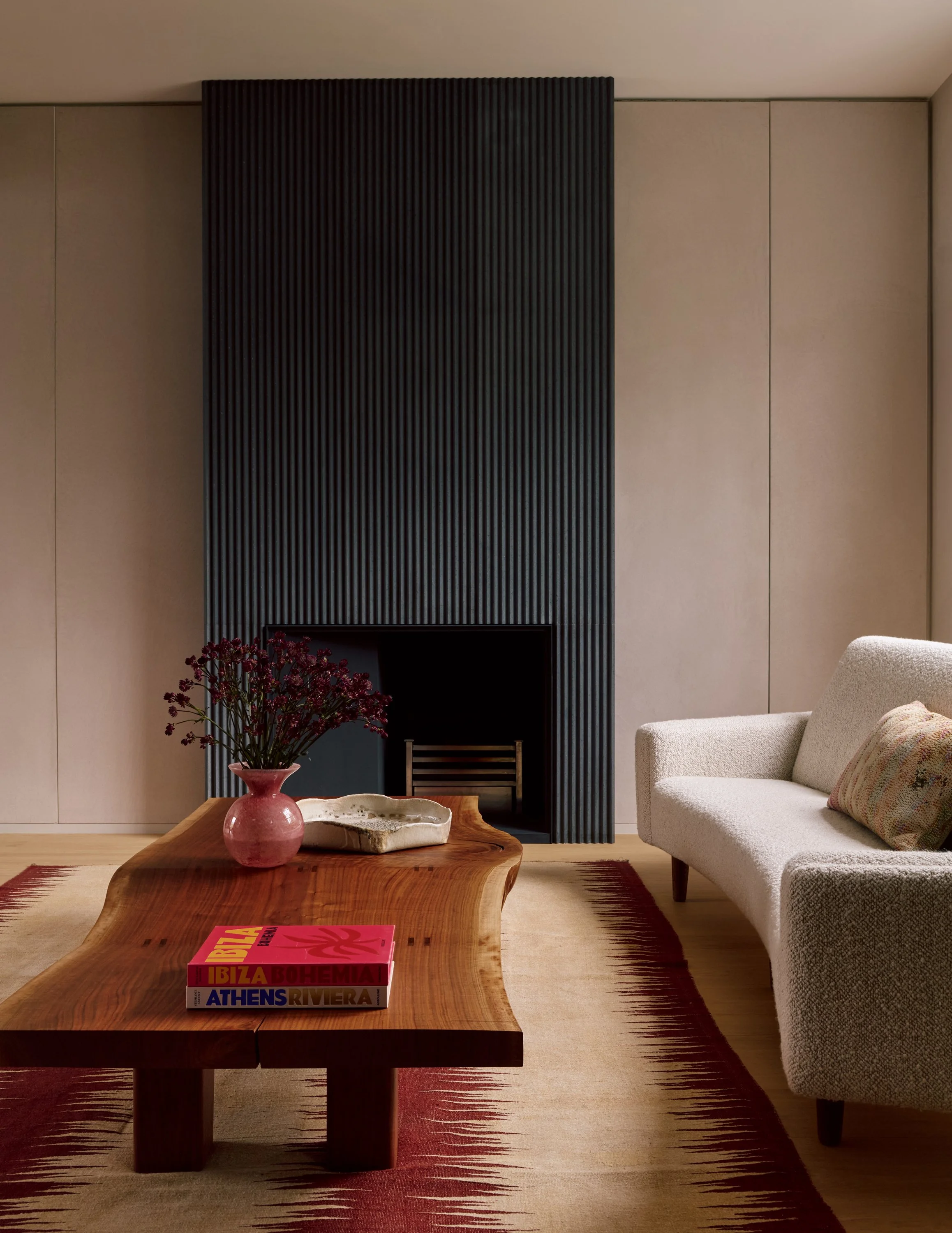
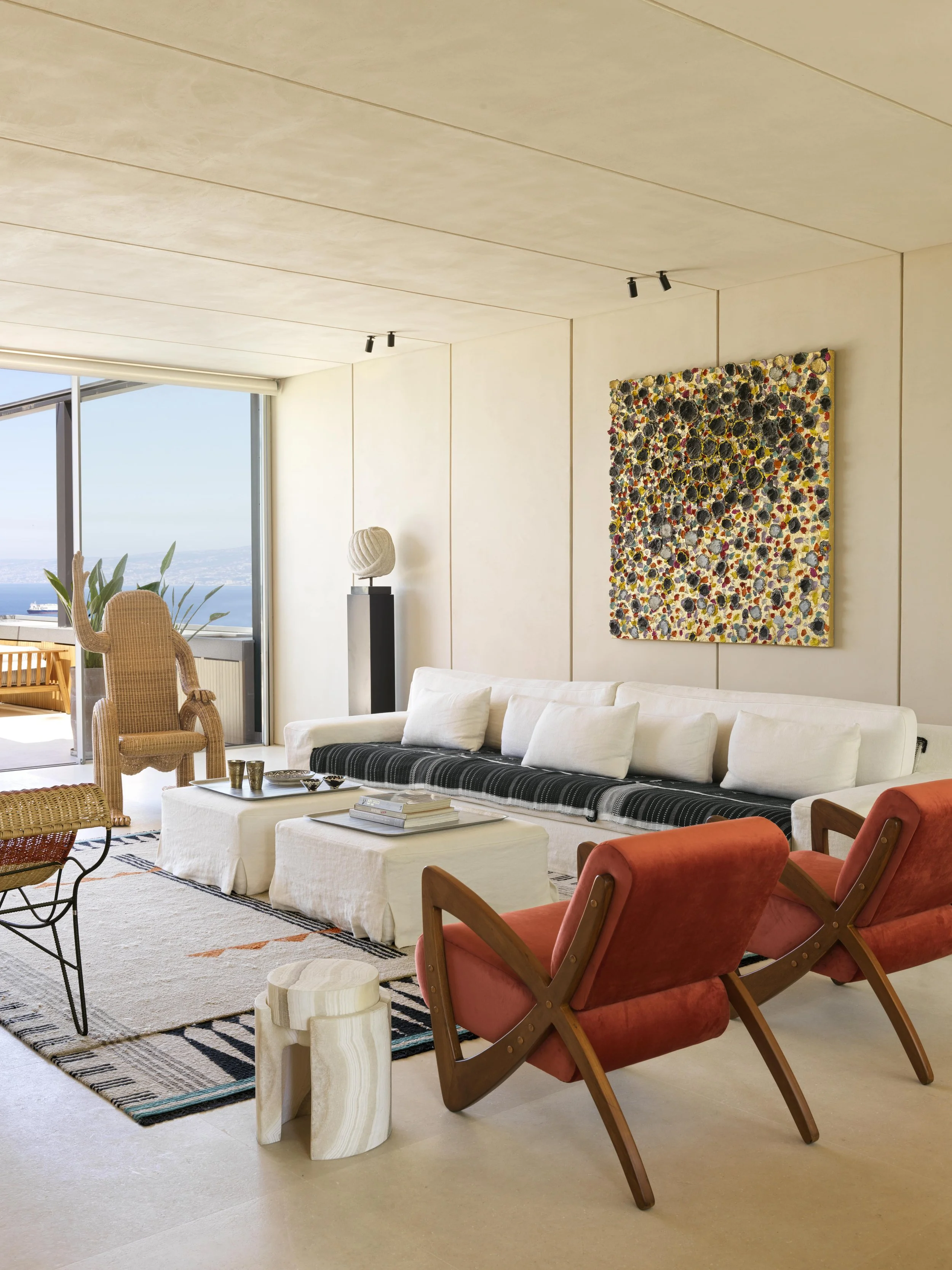
The redesign of the house aimed to restore the singular character of the 1940s apartment, and highlight its distinctive features, while creating a contemporary home for a family of decidedly unique individuals that work in different creative fields.
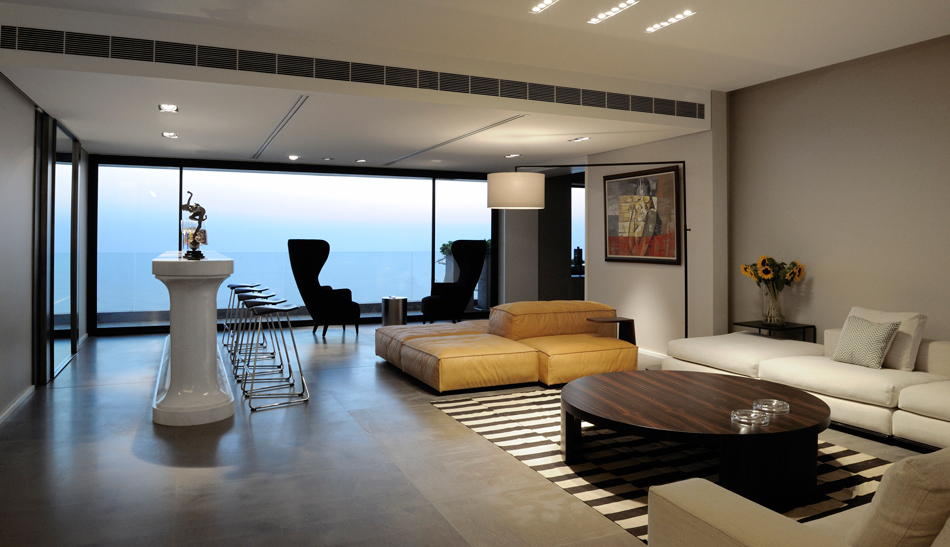
Rather than a single open space and the traditional separation of public and private areas, the experience of home was reconceived as a continuous “promenade” carved within the framework of the existing layout, around which a series of differentiated spaces loosely attach and organize themselves.
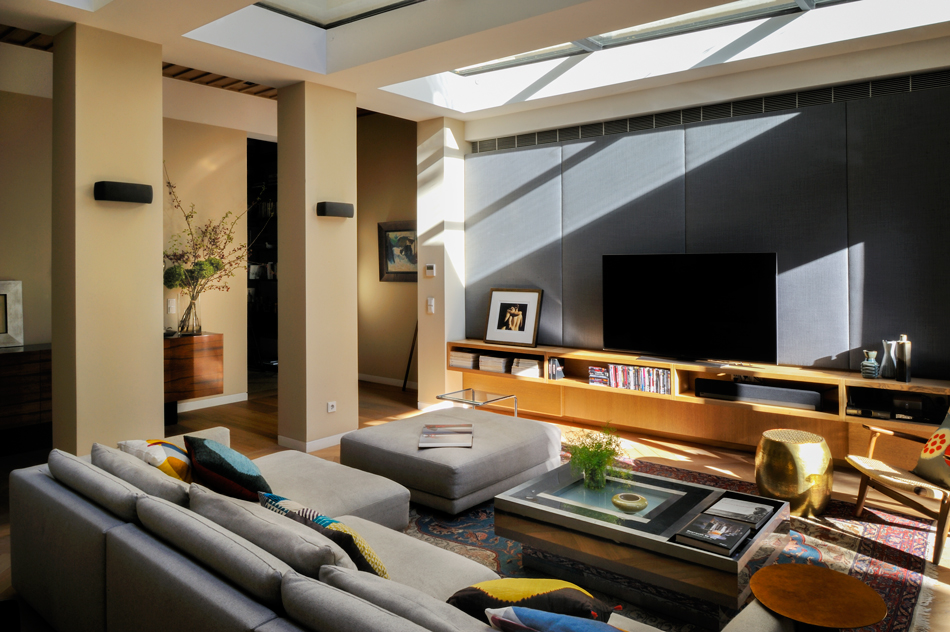
Around the inner courtyard of the building, a rhythm for the loggia is restored and reflected on a glass ceiling, forming a naturally-lit central colonnaded core to the home.
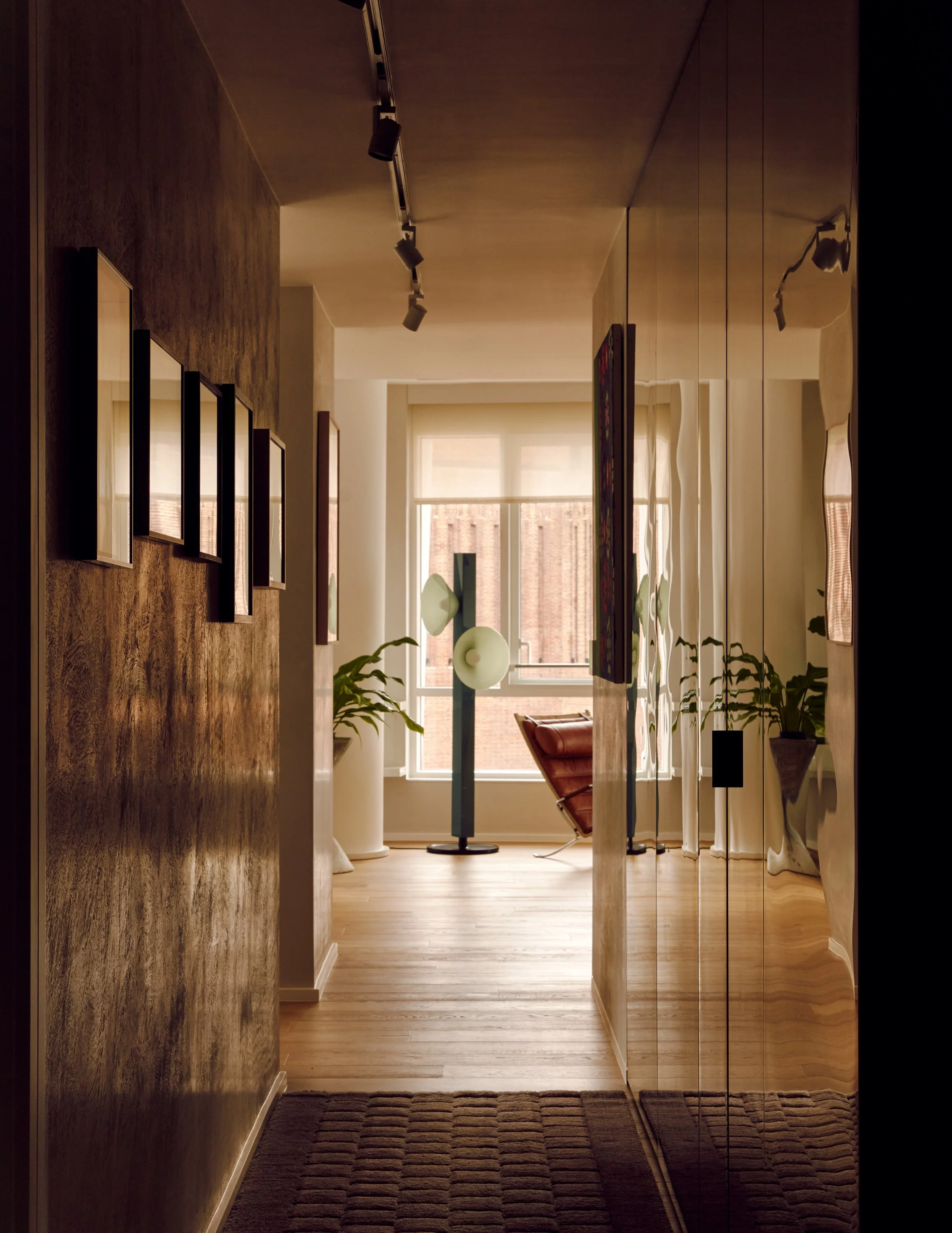
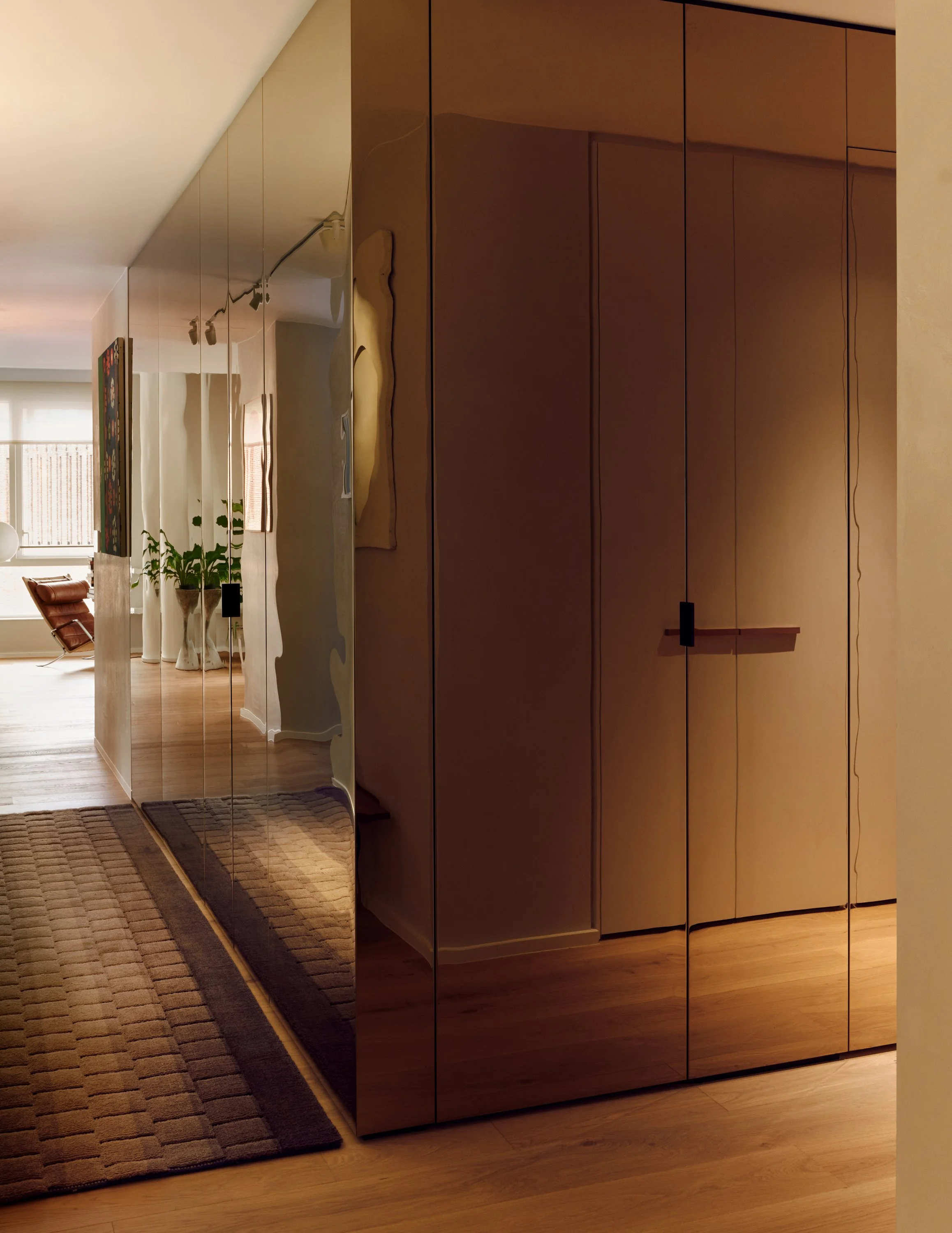
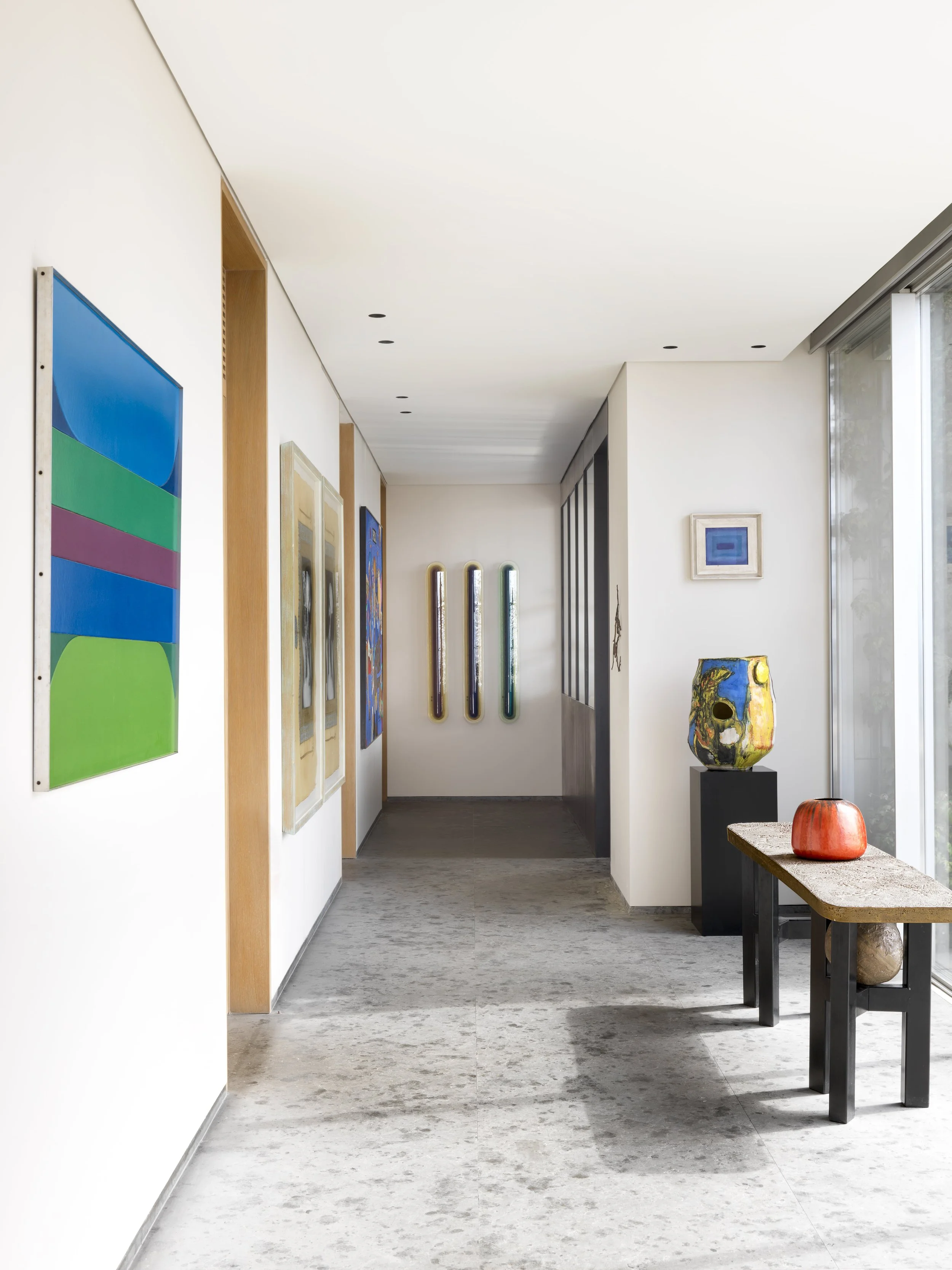
From this core two axes extend, one linking the entrance to this living space, along the kitchen and dining room doors, ending with the master bedroom quarters; the other linking the public living spaces together, across the colonnaded core. These form a continuous spatial experience as well as constant layered vistas throughout the various interior and exterior spaces of the home.
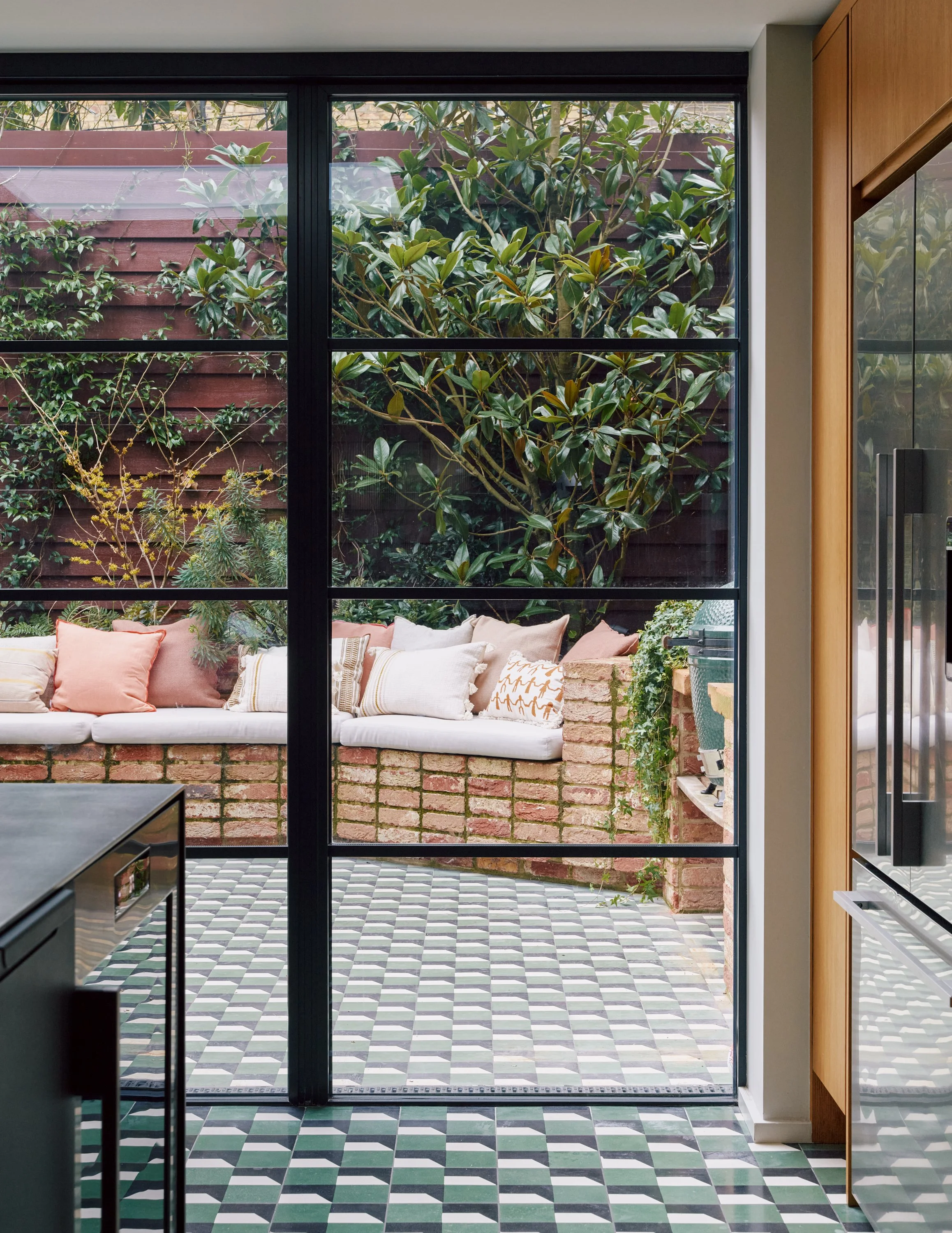
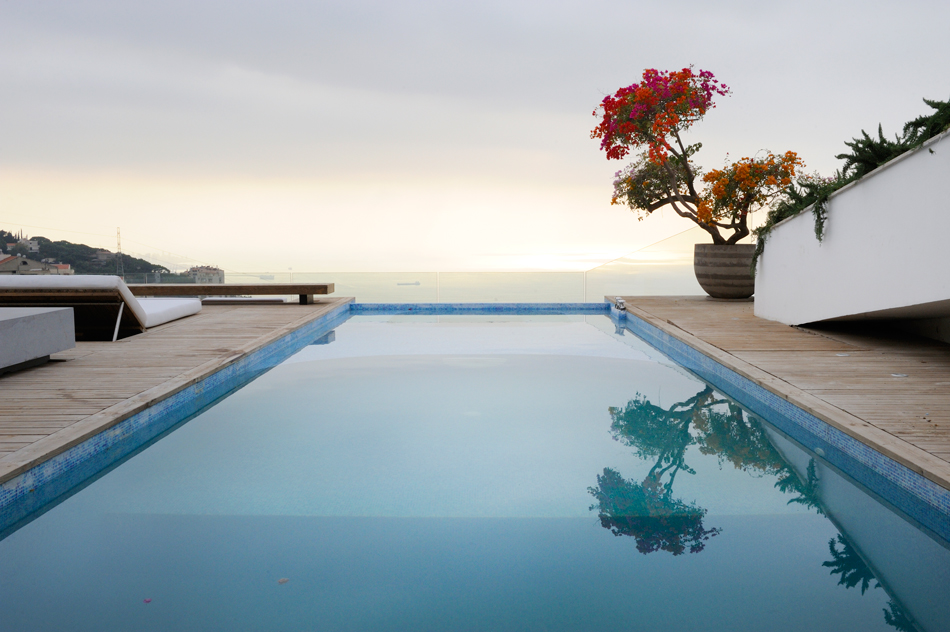
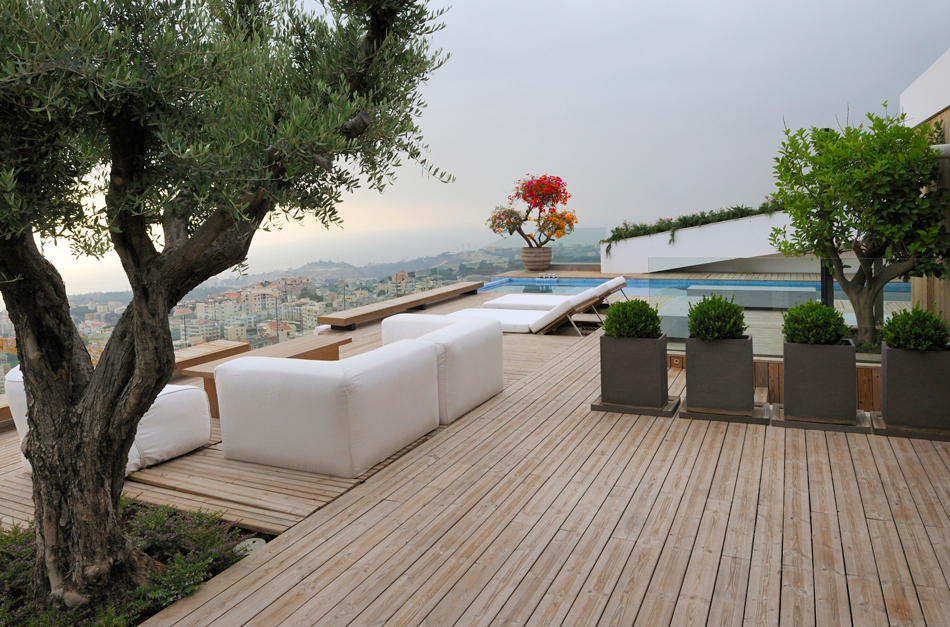
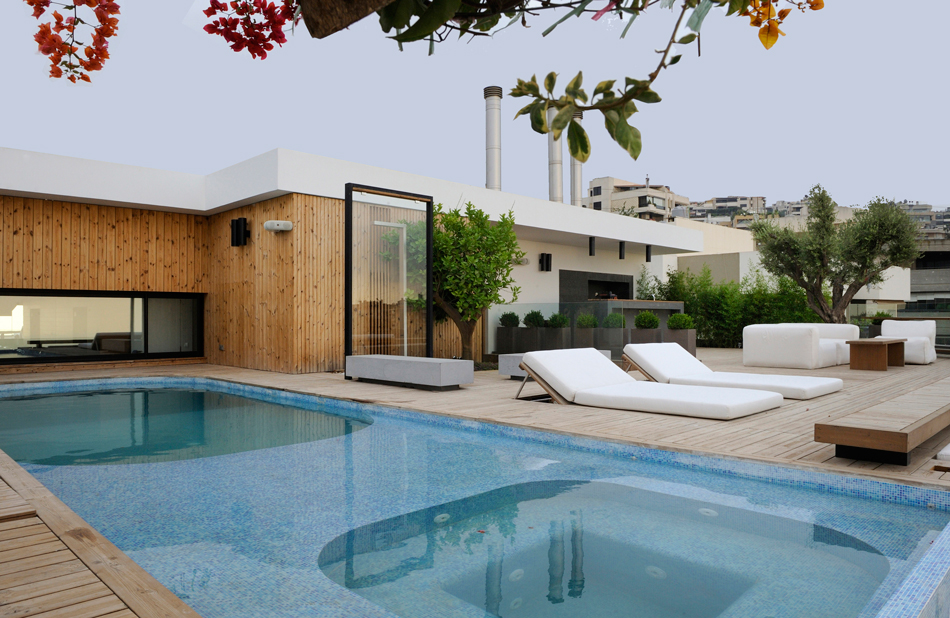
Outside, the gardens unfolds over several levels: On the street level, a low planted garden acts as a buffer, overlooked by an elevated terrace that extends the main living space outdoors. On the other side, the inner courtyard garden also steps down, following the topography of the land and allowing the ground floor spaces to open up to the light and landscape of the home.
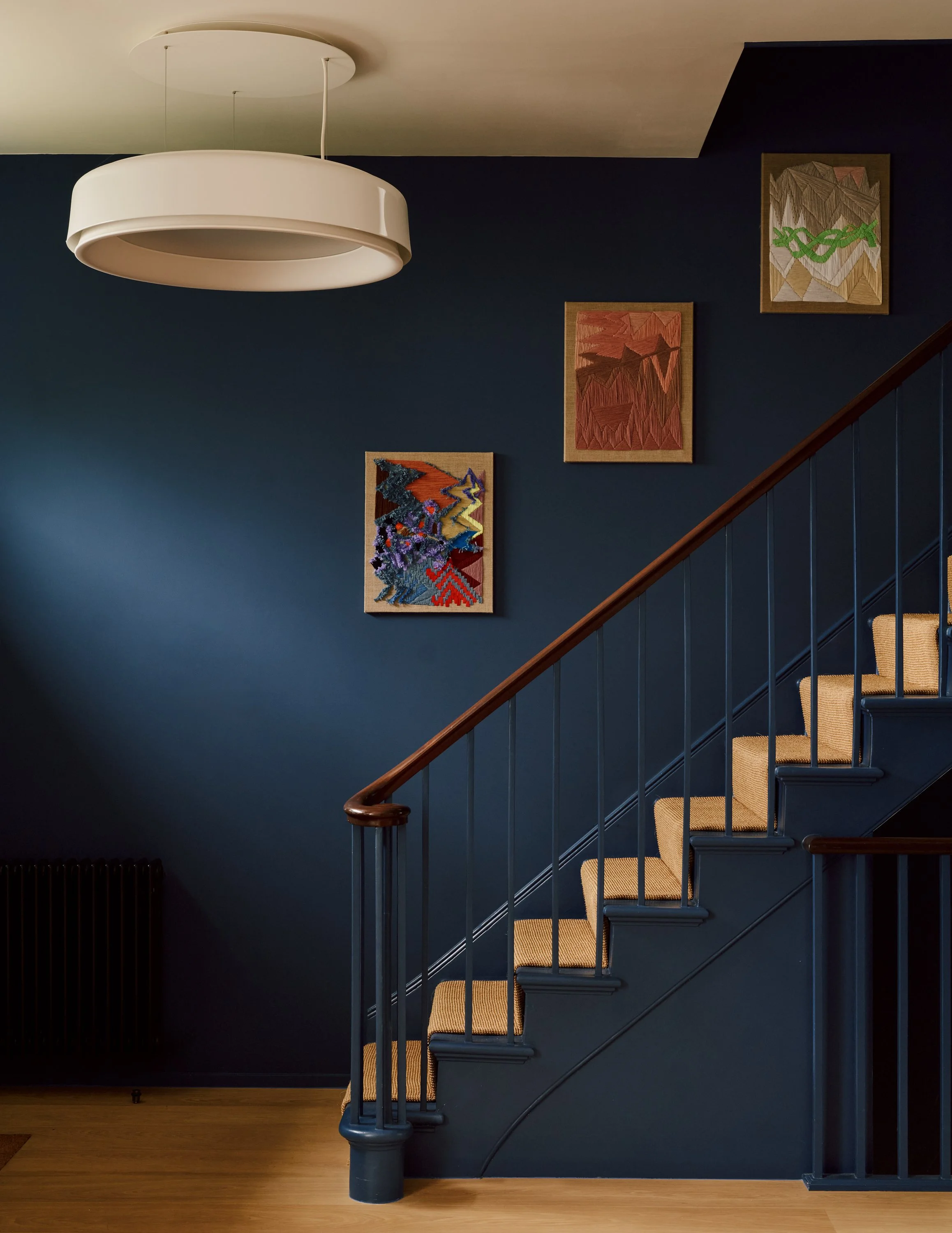
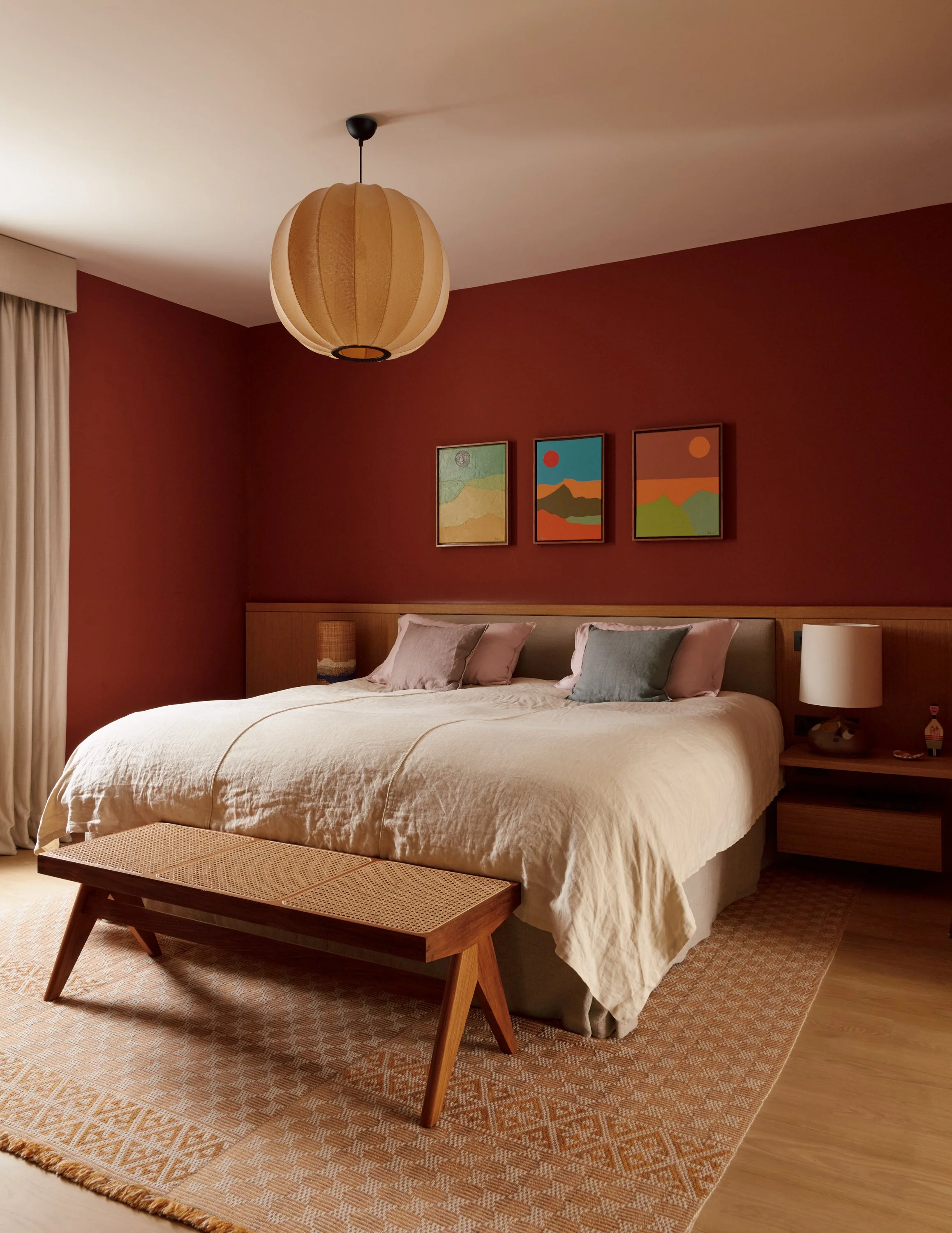
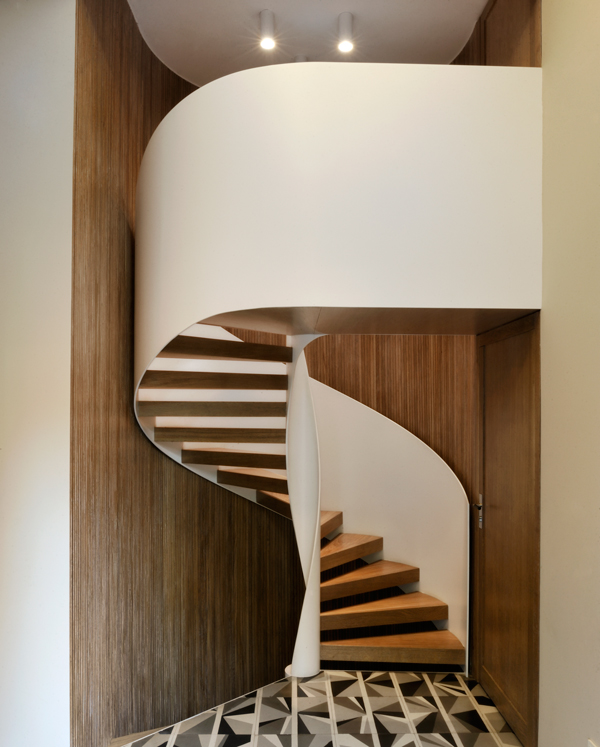
On the lower floor, a similar flow of spaces organizes itself around another circulation core, a central spiral staircase that sits like a hinge between the sister and brother’s quarters.
The sculpted stair rises up to meet the first floor at the main entrance, and continues to a mezzanine level that hangs above the kitchen. The organization of the private and public functions of the home along the uninterrupted “promenade” allows each space to maintain its identity and autonomy while still belonging to the cohesive unit of the home.
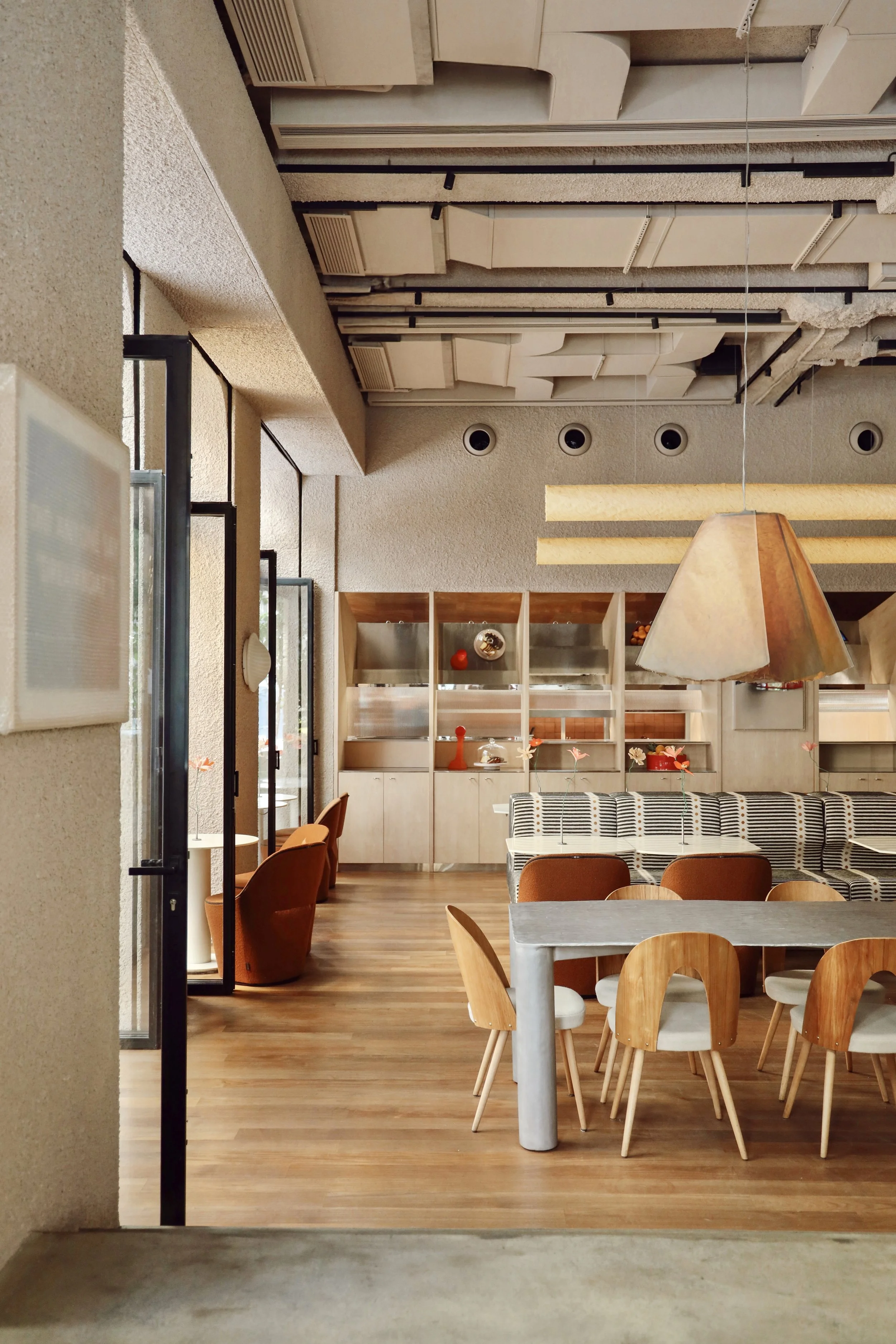
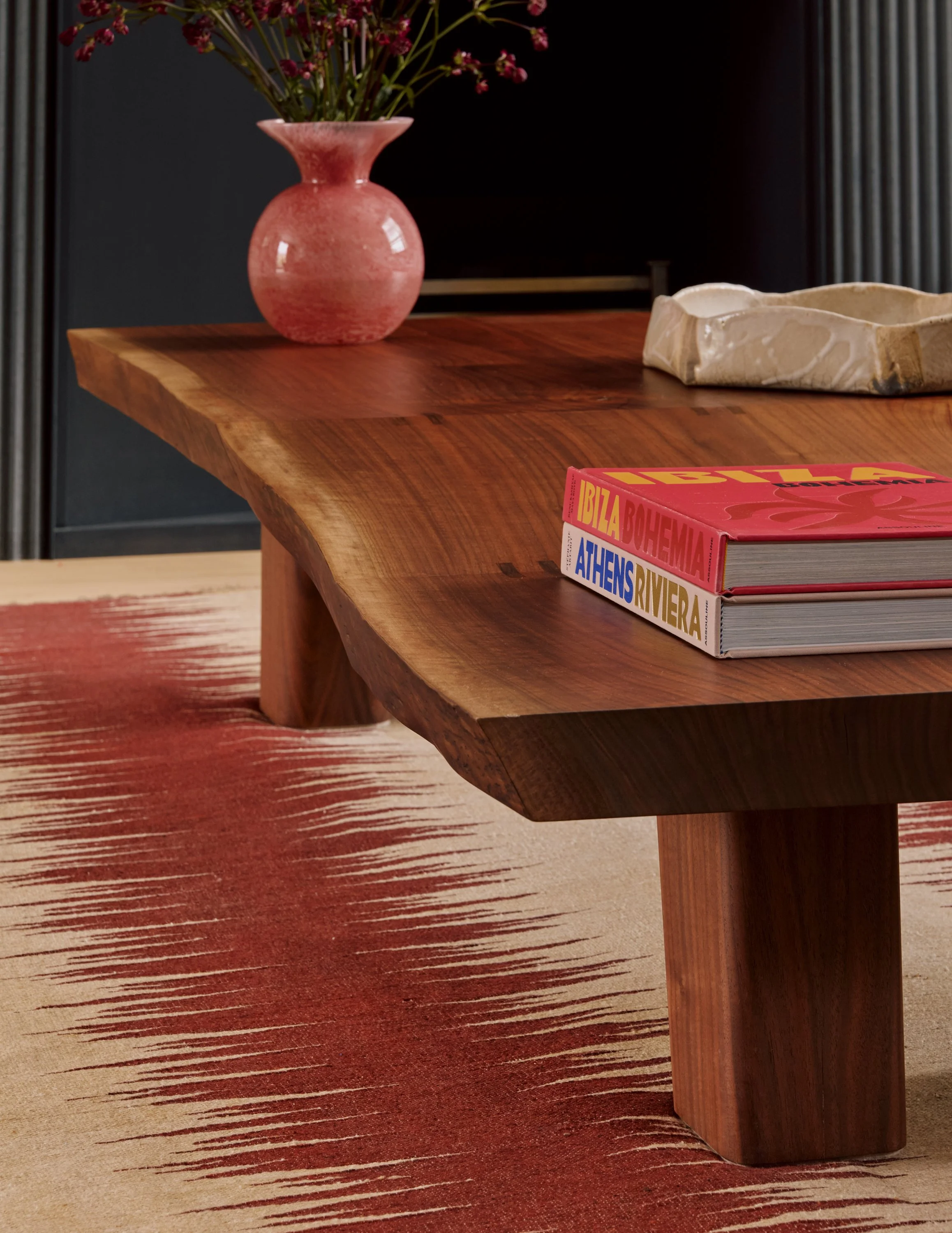
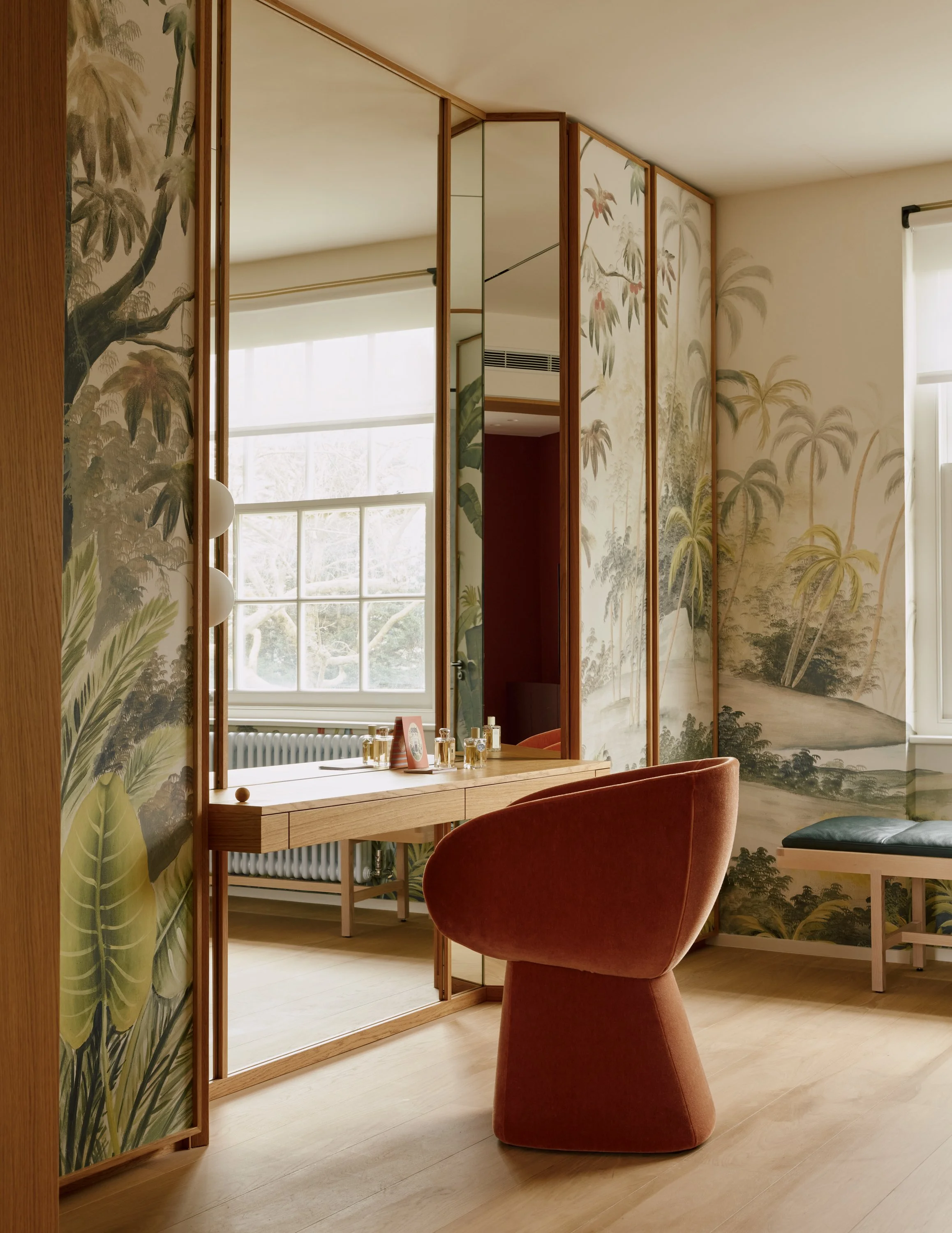
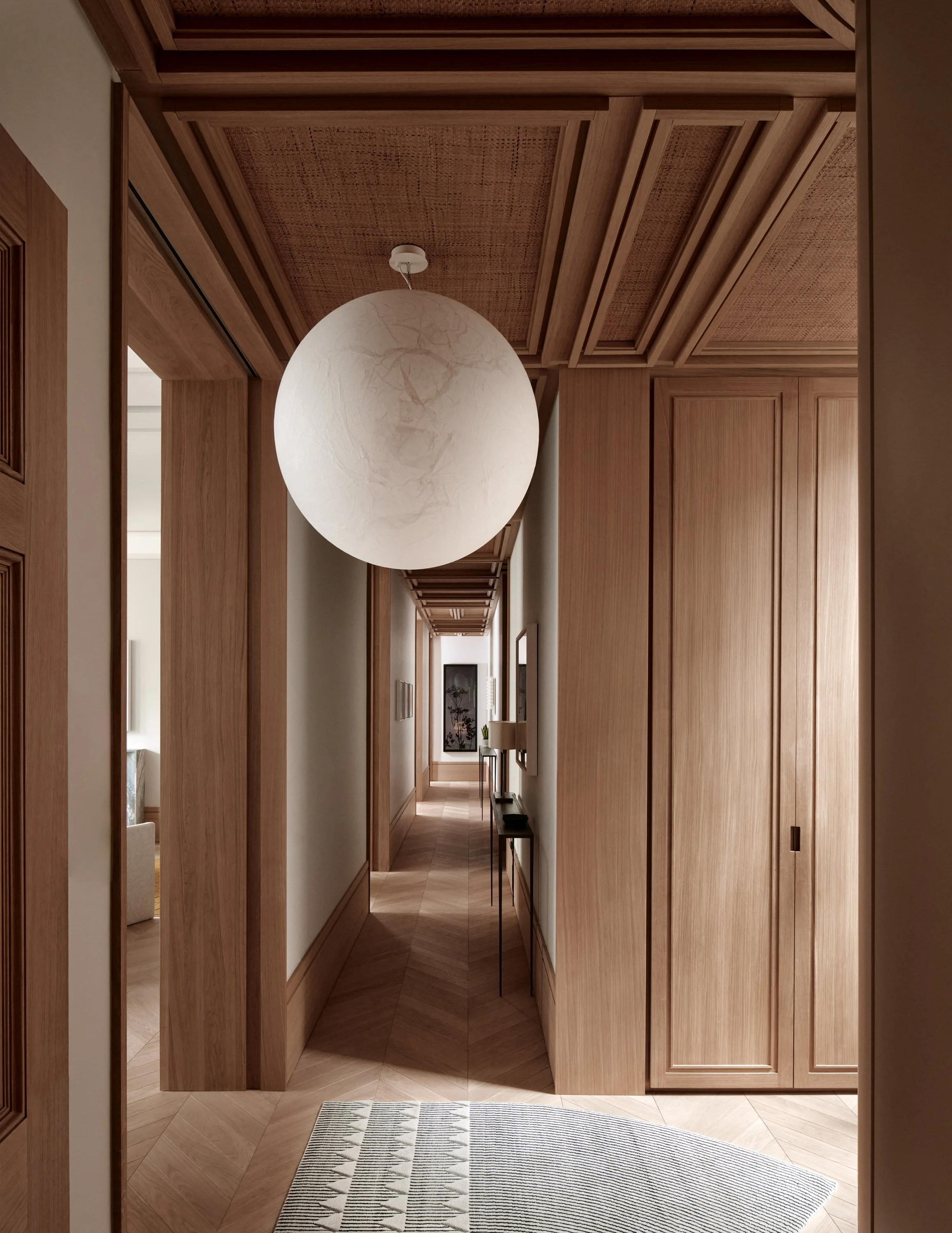
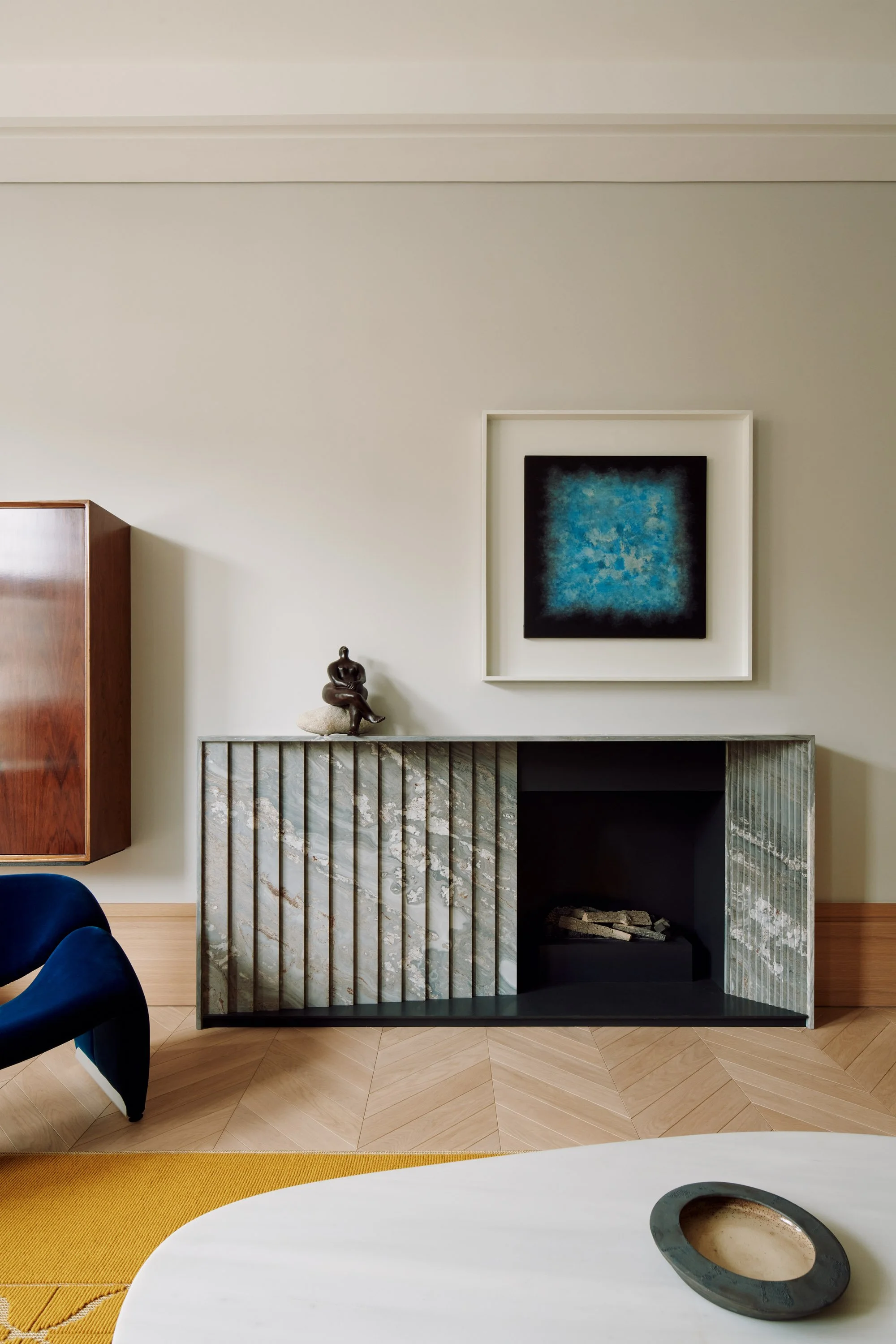
A continuous wooden parquet runs along this circulation spine, and is reflected in the ceiling, delineating the path throughout the house. In the main living spaces, the wood unfolds in a chevron pattern, distinct from the adjacent parquet.
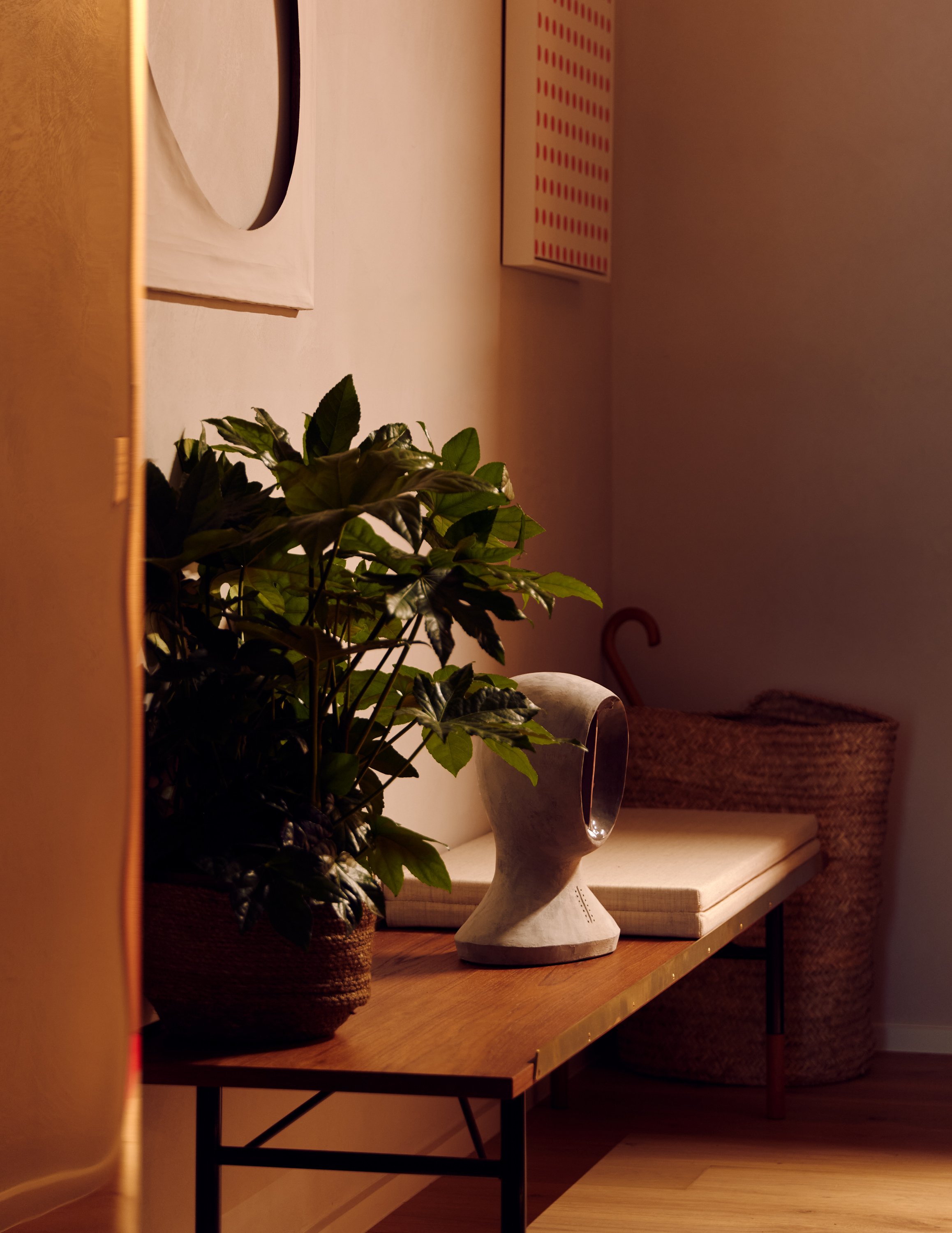
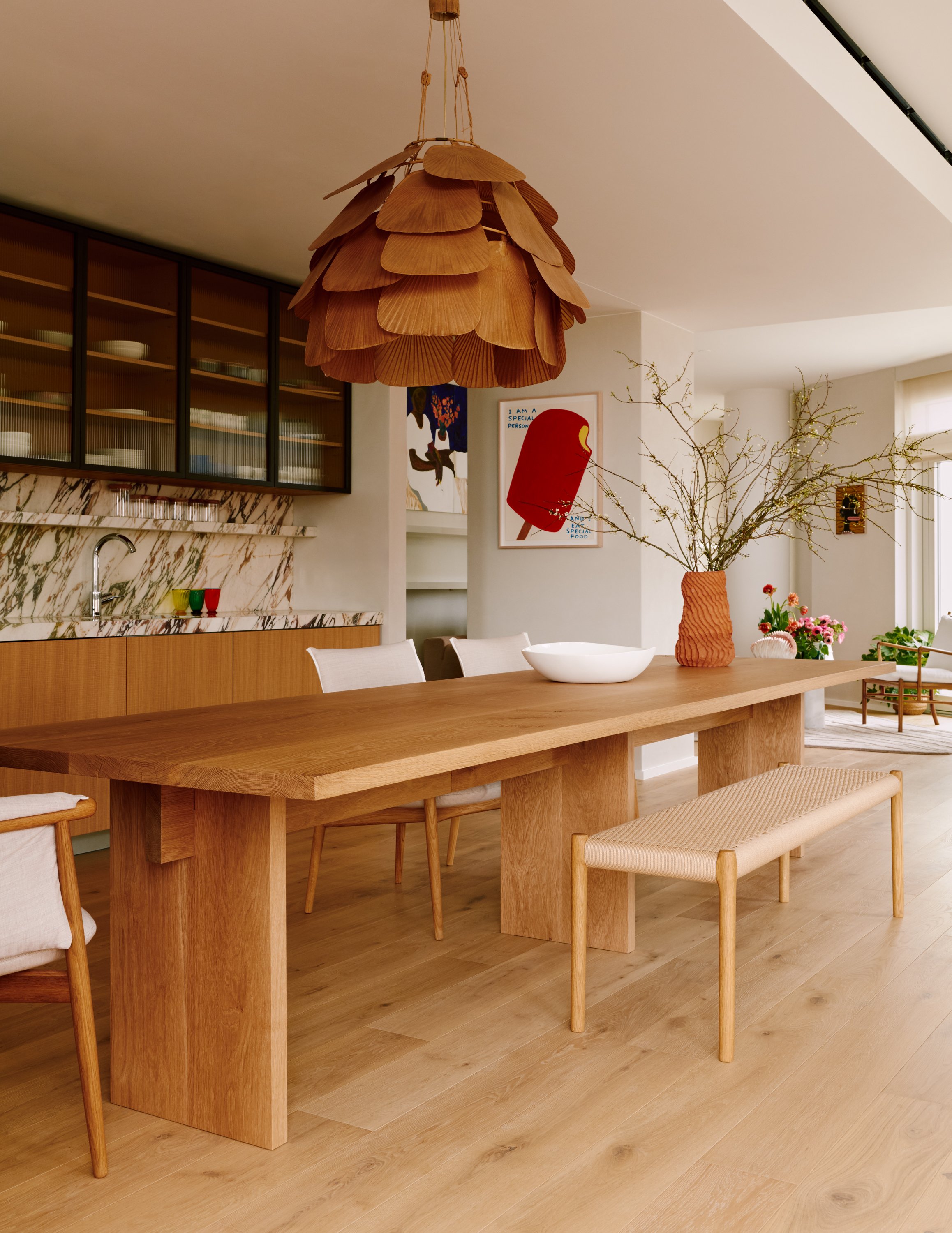
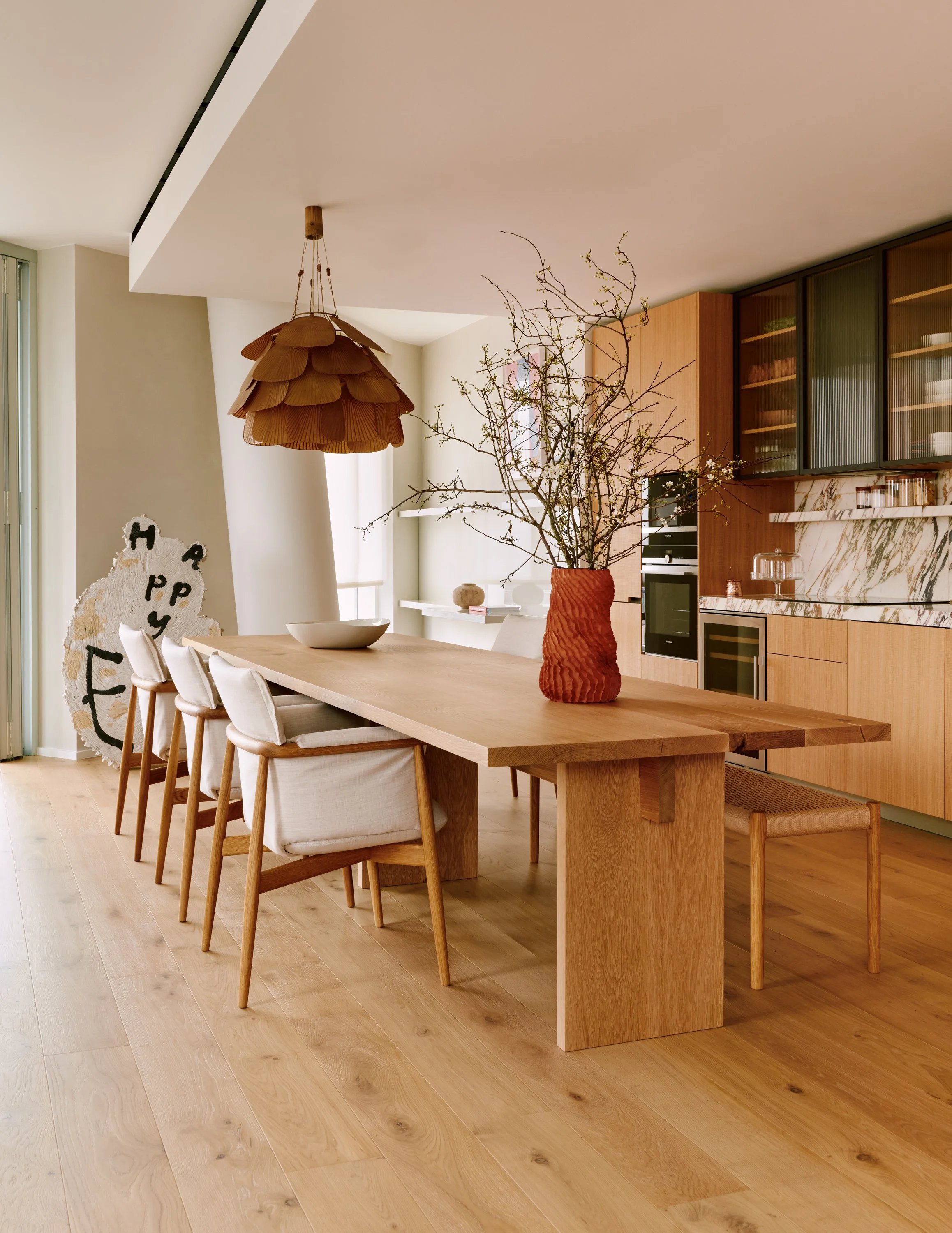
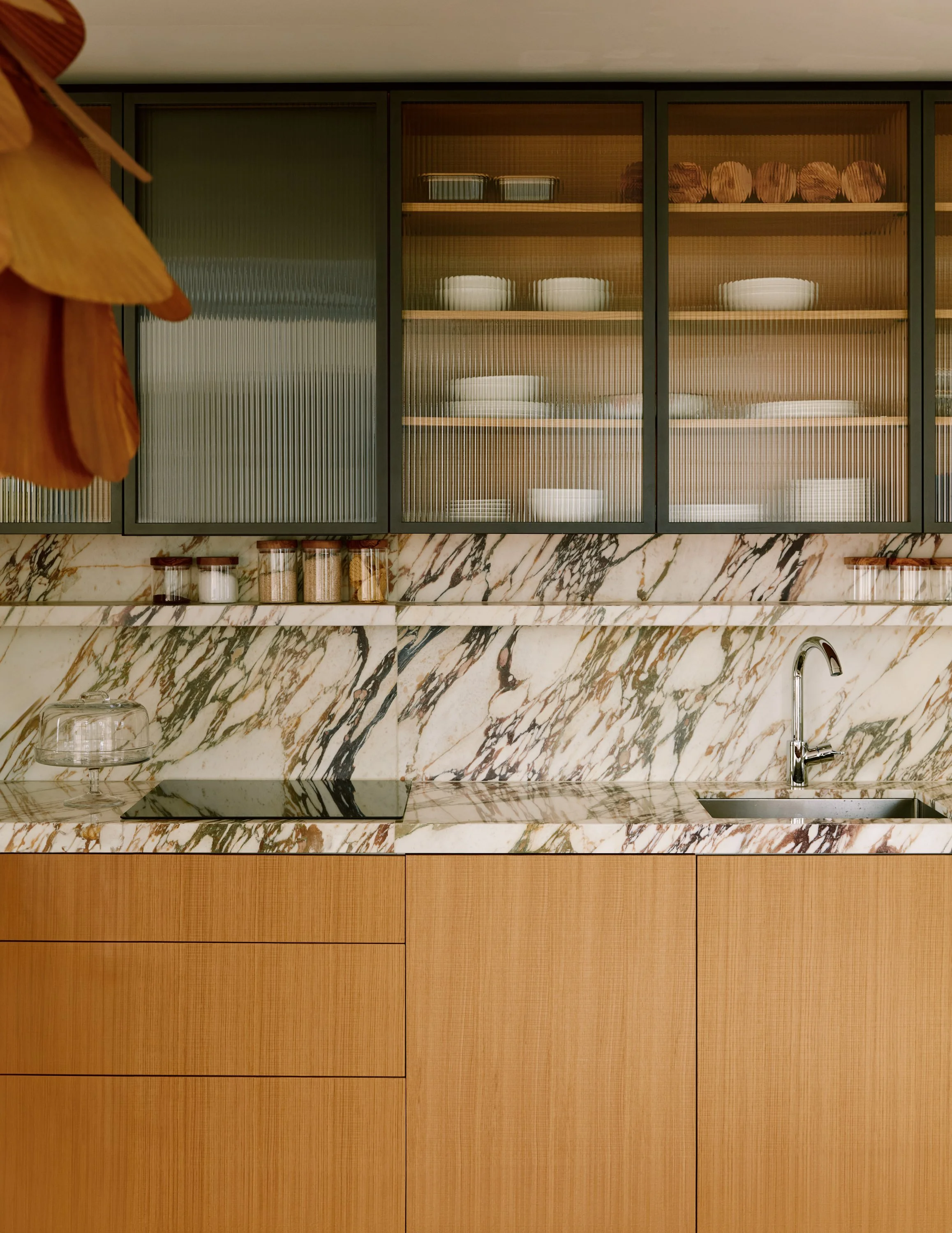
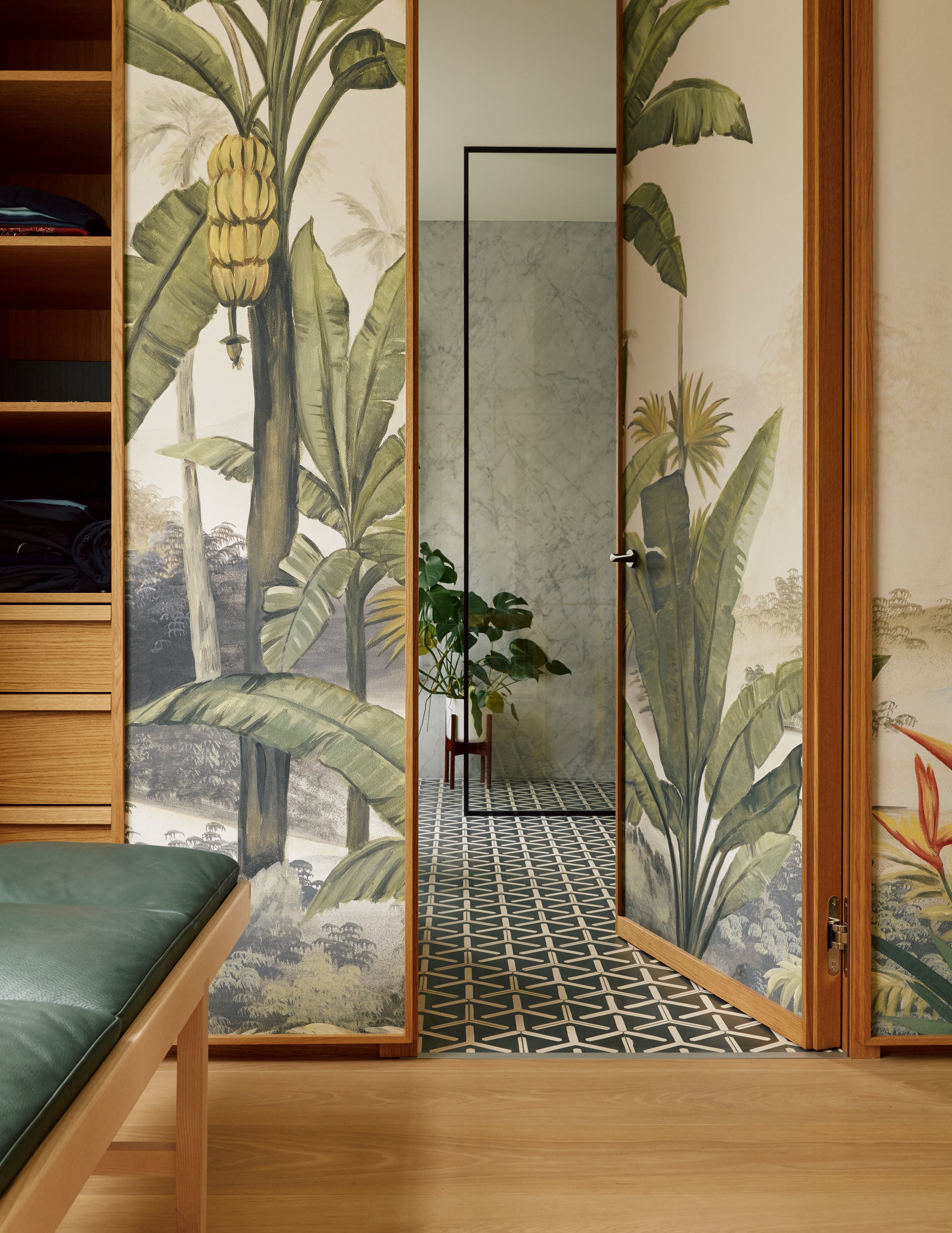
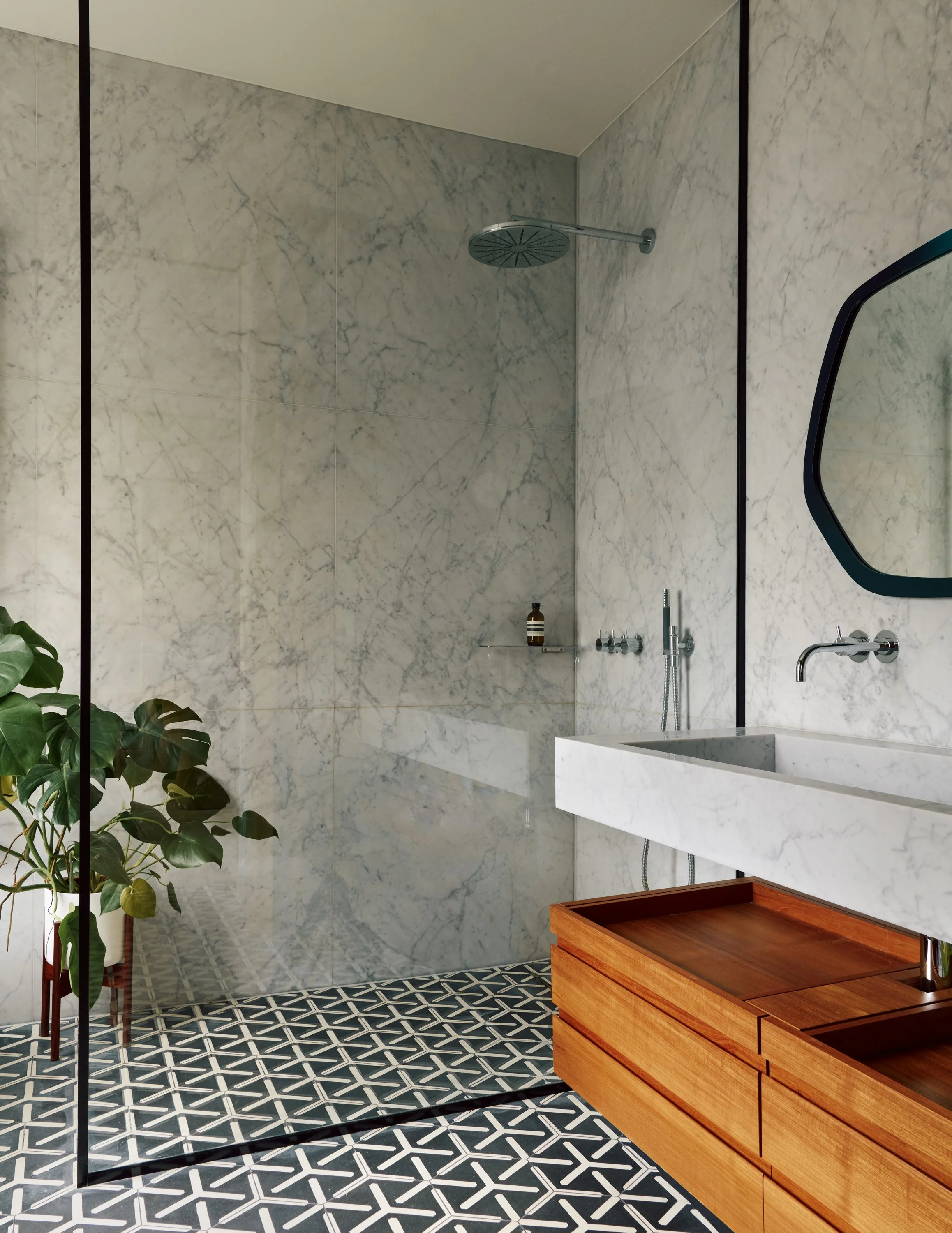
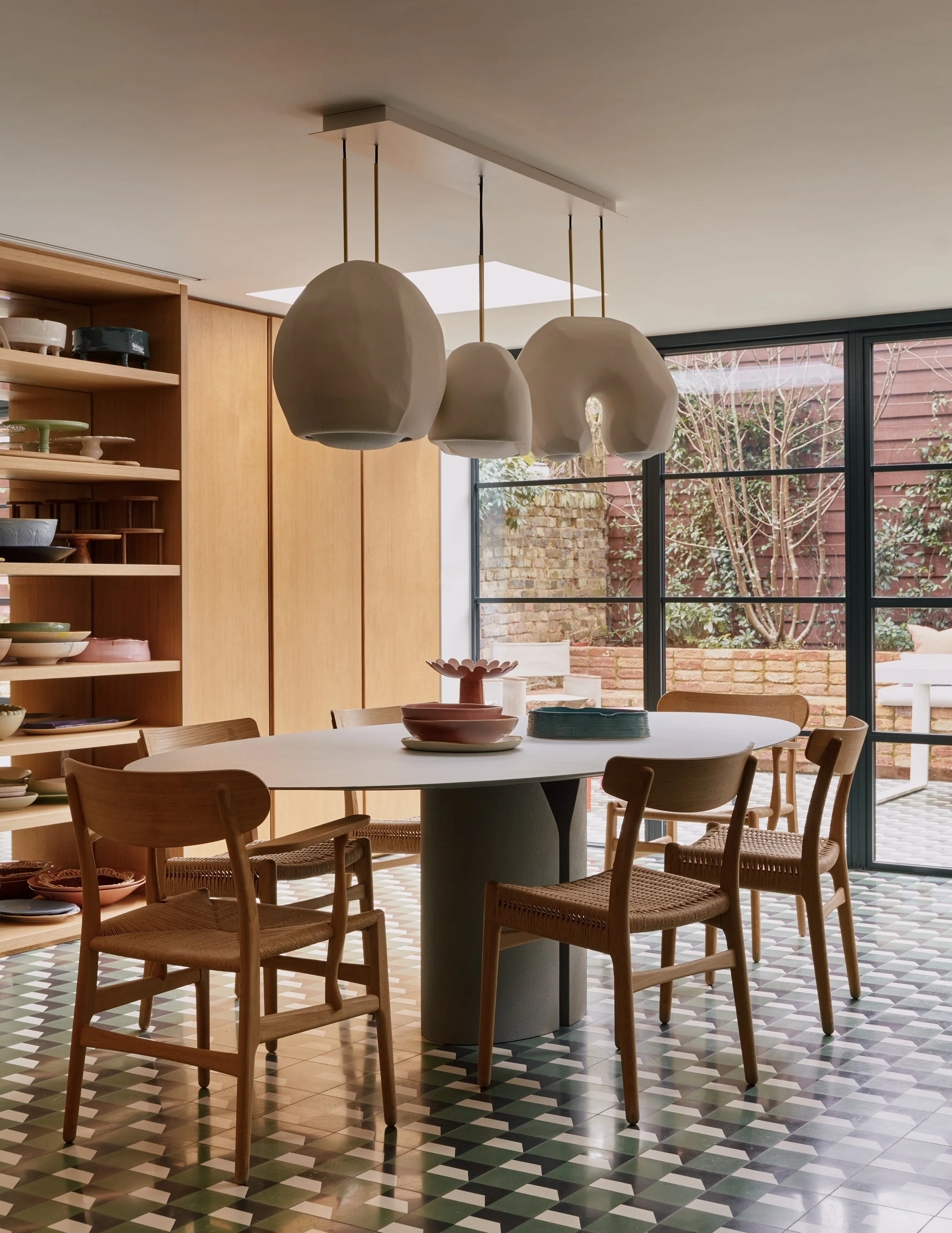
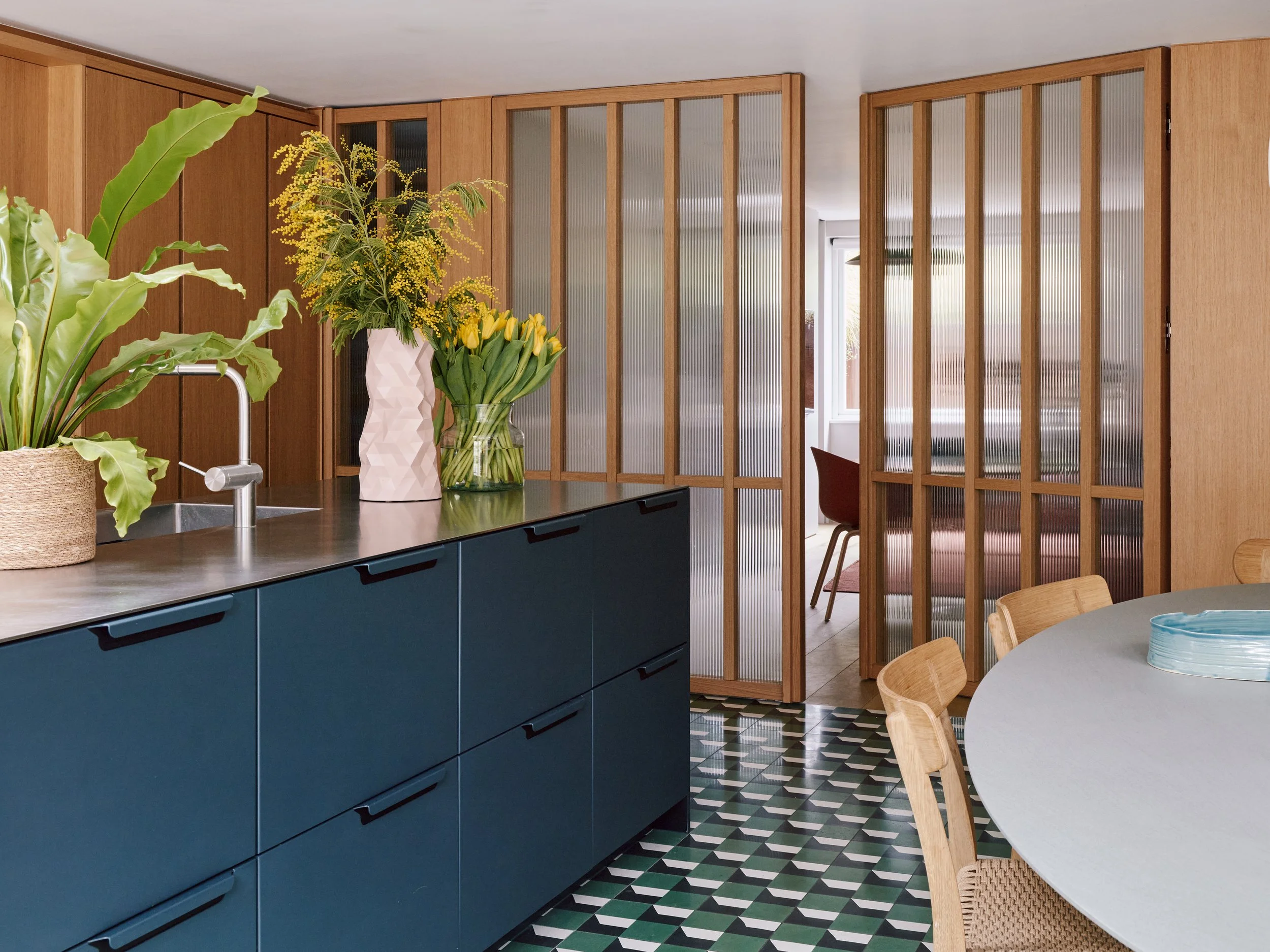
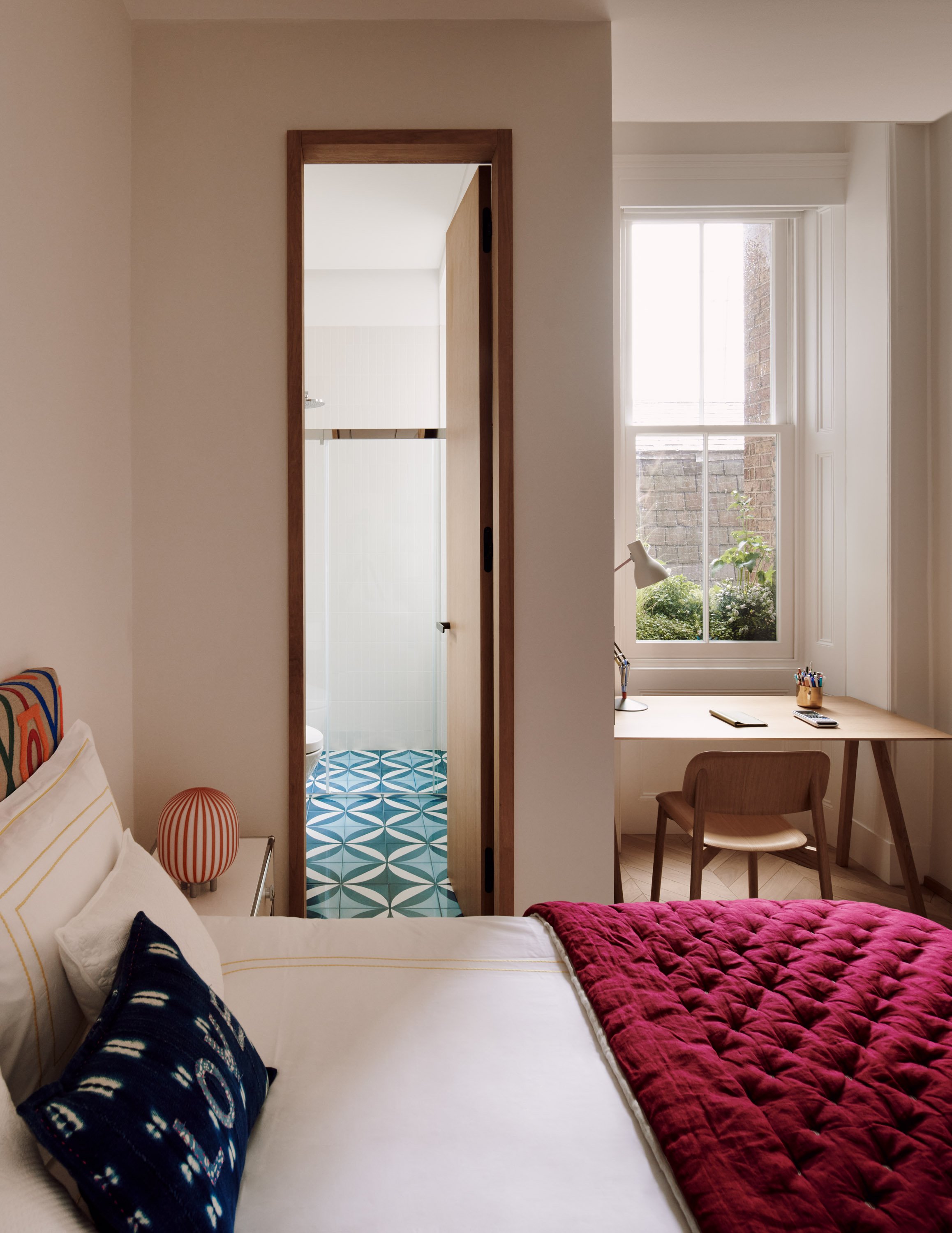
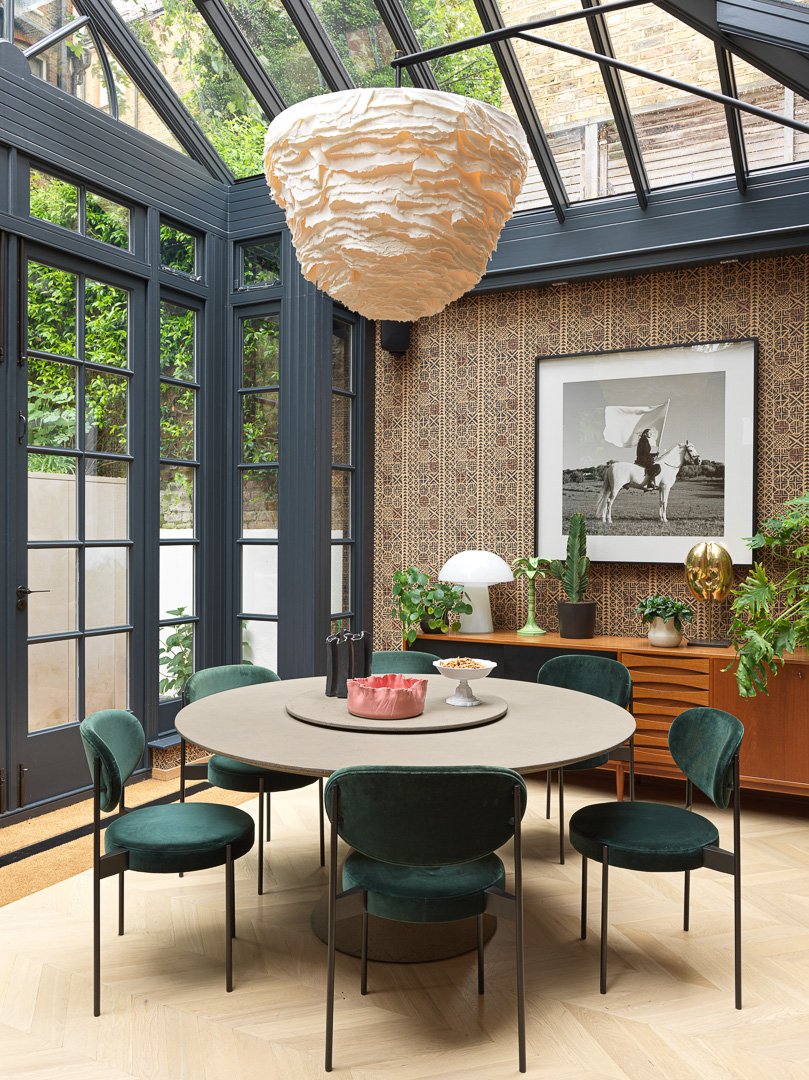
In the kitchen and connected dining area, the chevron is shaped by a gradient of custom-made encaustic cement tiles. Elsewhere, various geometric tile patterns, reminiscent of traditional 1940s Lebanese homes, punctuate unique spaces within the house: The main entrance, its extensions, the lobby below.
With these various details and differences unfolding like a variation on a same theme, the house celebrates the family’s diverse characters, and the multiplicity of the lives it shelters.
PROJECT INFO
Area: 800 m2
Date: 2015
Status: Built
Location: Beirut, Lebanon
PROJECT CREDITS
MG Partners: Michèle Chaya, Georges Maria
MG Team: Raquel Chouiti, Maureen Awad, Ismail Bdeiry
Engineering Consultants: RKN
Photography: Géraldine Bruneel